
Field Notes · November 5, 2026 · Tiki Culture & History
Don the Beachcomber and the Birth of the Tiki Bar
From a tiny Hollywood bar to the Zombie cocktail and a restaurant empire, uncover Donn Beach's legacy and the people who helped create American tiki.
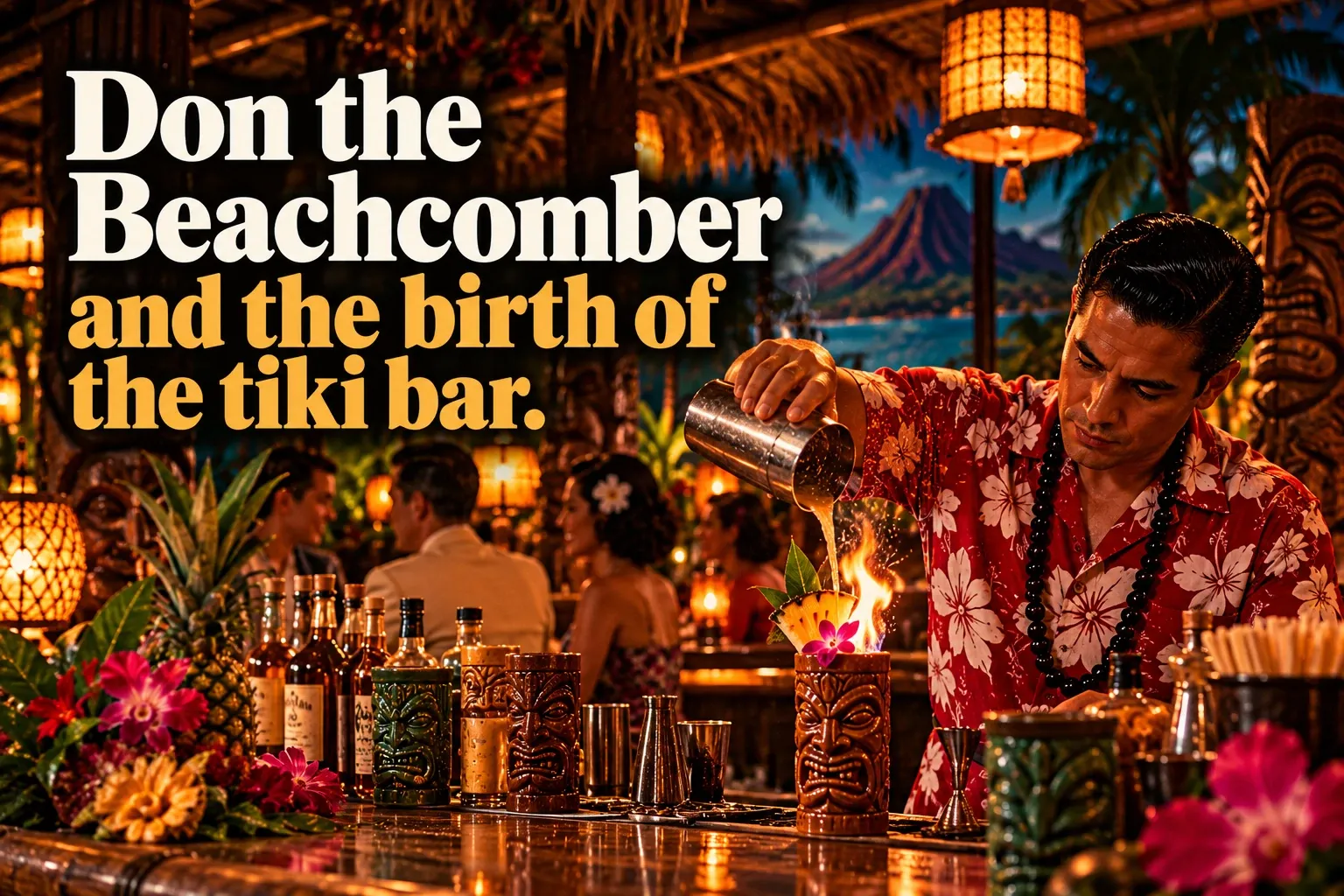
Before tiki became a midcentury obsession, a Hollywood original figured out how to make a night out feel like a voyage to another world. The drinks were extraordinary. The real story behind them is even better.
Walk into an old-fashioned tiki bar and you can usually tell within ten seconds whether someone understood the assignment.
It's not the bamboo by itself. Not the carved figure near the door. Not even the glass fishing floats glowing overhead.
It's the moment the room convinces you to forget the parking lot outside.
Somebody had to come up with that idea. Or, more precisely, somebody had to assemble the lighting, décor, hospitality, and cocktails into an experience that other people could recognize, imitate, and eventually turn into an entire movement.
That somebody was Ernest Raymond Beaumont Gantt, who became famous as Donn Beach. His Hollywood bar, first known as Don's Beachcomber, is widely recognized as the starting point of the American tropical cocktail-bar tradition.
But the story gets more interesting when you look past the founder's legend. There's a disputed opening date, a remarkably sophisticated approach to rum, a business partner who built the operation into an empire, and a Filipino bartender whose contribution is too often missed.
And there is an important distinction to keep in mind throughout: American tiki was an invented entertainment style, not an authentic representation of Hawaiian or other Pacific Island cultures. That doesn't erase its importance to cocktail and restaurant history. It helps us understand what was actually created.
Before the First Tiki Bar, There Was a Hollywood Idea
Southern California in the early 1930s was an excellent place to sell an escape.
The Great Depression was changing what Americans could afford. Hollywood, meanwhile, was busy producing stories and settings that gave people a way to disappear into somewhere else for a little while. Tropical islands, shipwrecks, adventure travel, and the romanticized South Pacific were already familiar pieces of popular entertainment.
Donn Beach understood that vocabulary. Accounts of his early life describe travel through the Caribbean and Pacific, work around Hollywood, and a talent for making his personal history as colorful as the places he wanted to create.
His biography has acquired more than a little mythology over the decades. You don't have to believe every adventure story to recognize the insight at the center of his business: customers didn't need to board a ship to feel like they'd gone somewhere.
He could build that feeling in a room.
What emerged was something new in American hospitality: a small bar that blended a deliberately transporting environment with complex rum cocktails, then treated the entire evening as a kind of theater.
Historical background: Smithsonian Magazine, There's More to Classic Tiki Than Just Kitsch
McCadden Place: A Tiny Bar With an Outsized Legacy
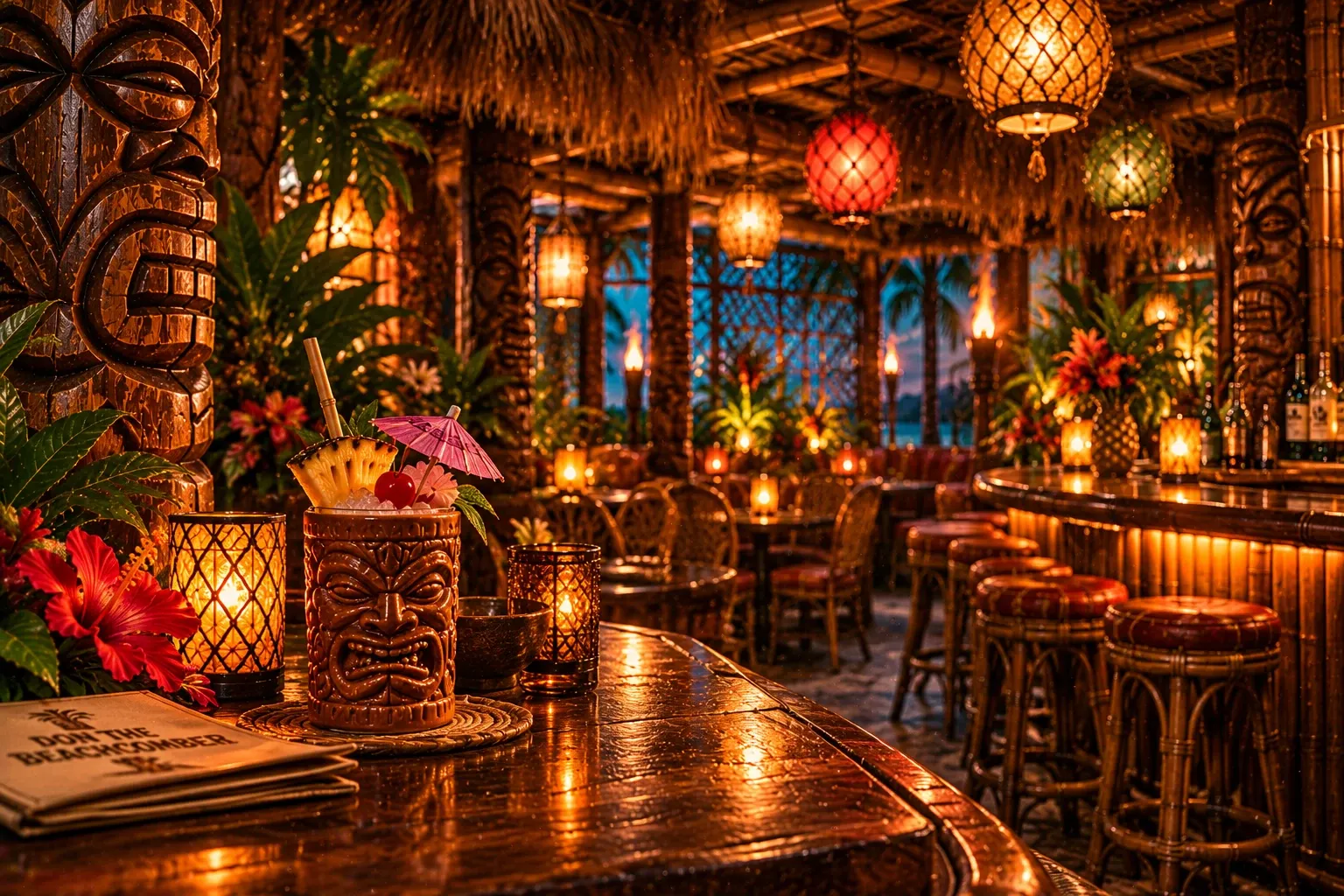
The first Don's Beachcomber operated on North McCadden Place in Hollywood. The modest early location is generally placed at 1722 North McCadden Place, with the better-known restaurant moving across the street to 1727 North McCadden Place as the enterprise grew.
That sounds straightforward until you ask exactly when the first location opened.
Many accounts say 1933. The Oxford Companion to Spirits & Cocktails dates Donn Beach's Hollywood opening to 1934. More recently, researcher Tim Glazner has reported that material from Beach's own papers points to a 1932, pre-Repeal speakeasy beginning. The precise chronology remains contested, and it is better to acknowledge that than to pretend one tidy date has settled the issue.
What matters for the larger story is clear: in the early 1930s, a small Hollywood drinking spot became the prototype for a style of bar that would spread across the country.
Imagine the contrast. Outside: ordinary Los Angeles, with traffic, storefronts, movie business, and Depression-era uncertainty. Inside: dim light, wicker, bamboo, nautical salvage, tropical plants, and a room arranged to make the city feel distant.
Later establishments would add much grander buildings, landscaping, theatrical lighting, and specialty rooms. But the foundational idea was already there.
You weren't simply ordering a drink. You were entering a made-up destination.
Historical account: PBS SoCal, Don the Beachcomber's Tiki Haven
Opening-date research: The Atomic Grog, reporting Tim Glazner's archival findings
Reference: The Oxford Companion to Spirits & Cocktails, Beach, Donn
The Drinks Were the Real Breakthrough
It's tempting to think the first tiki bar succeeded because the décor was so distinctive.
But imagine taking the scenery away and sitting down with one of Donn's cocktails. You would still have something genuinely different from the usual American bar drink of that era.
Beach worked with a vocabulary drawn substantially from Caribbean rum and punch traditions, especially the Planter's Punch family. From that starting point, he developed carefully balanced combinations of multiple rums, fresh citrus, syrups, spices, and other flavoring ingredients.
That approach was more inventive than tossing rum and pineapple juice into a glass.
One rum might supply weight. Another could add an aromatic edge. A different sweetener or spice might change the finish. Small adjustments made big differences, and some drinks demanded an extraordinary amount of preparation behind the scenes.
There is a useful lesson here for anyone who has ever wondered why a serious tiki cocktail tastes so much better than a bright red vacation drink: the original craft was built around structure, not simply sweetness.
And because these drinks were time-consuming, Donn had a powerful reason to guard the details.
The Zombie: A cocktail that became its own advertisement
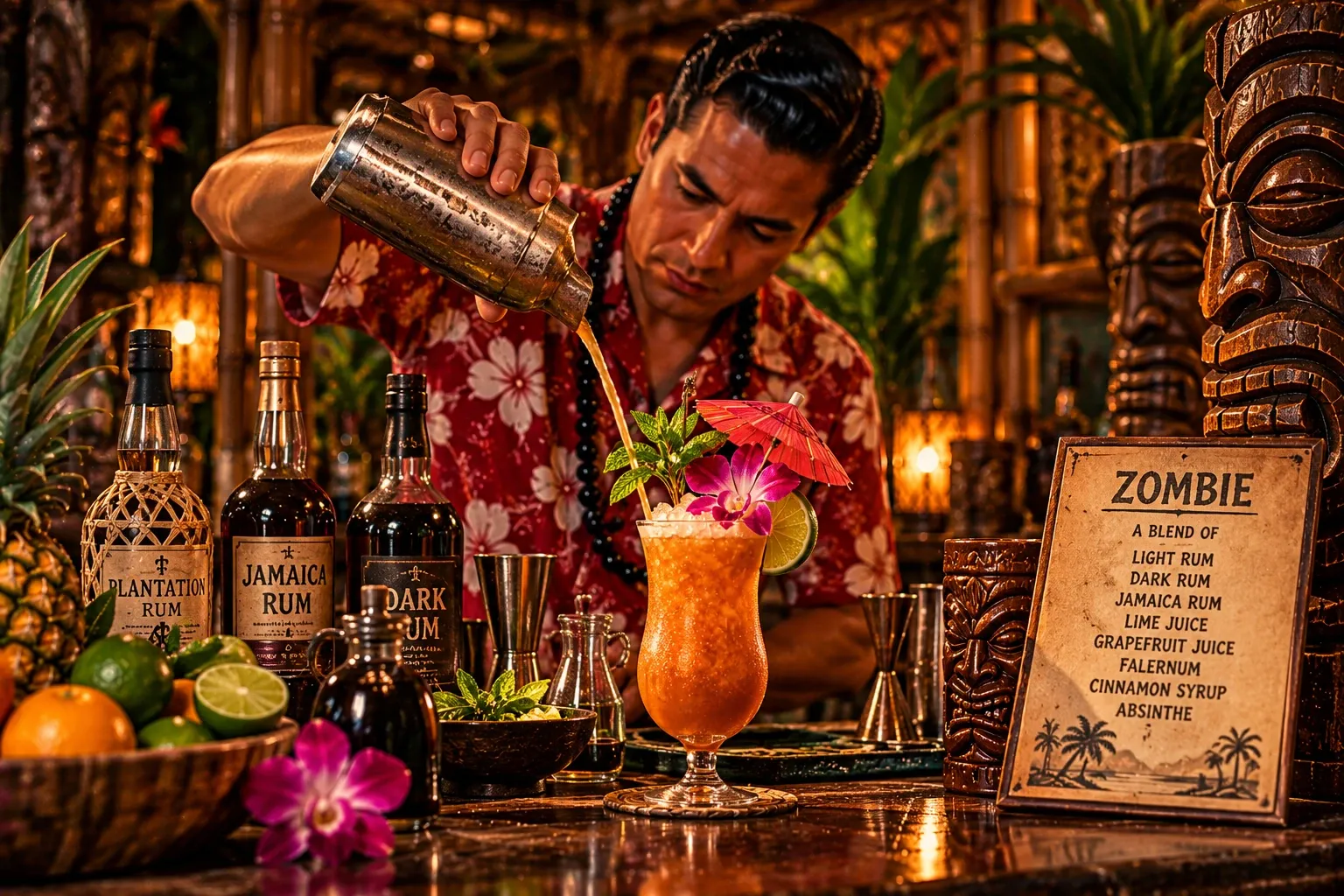
Of all the drinks associated with Don the Beachcomber, the Zombie was the one that captured the public imagination.
The Oxford Companion to Spirits & Cocktails dates its creation to 1934. It was potent, yes, but its reputation was more than a measure of alcohol. A layered mixture of rums, citrus, and carefully chosen flavor components created something that tasted far more deliberate than its outrageous name suggested.
The stories surrounding the drink became part of the marketing. So did the famous two-Zombies-per-customer limit, repeated in accounts of the original bar.
The combination was irresistible to newspaper writers and Hollywood gossip: mysterious recipe, unusually strong drink, glamorous setting, and a name you were unlikely to forget.
A good cocktail helped the business. A cocktail that people talked about after leaving was something even more valuable.
Donn had developed both.
Drink history: The Oxford Companion to Spirits & Cocktails, The Zombie
The secret recipes were part of the mystique
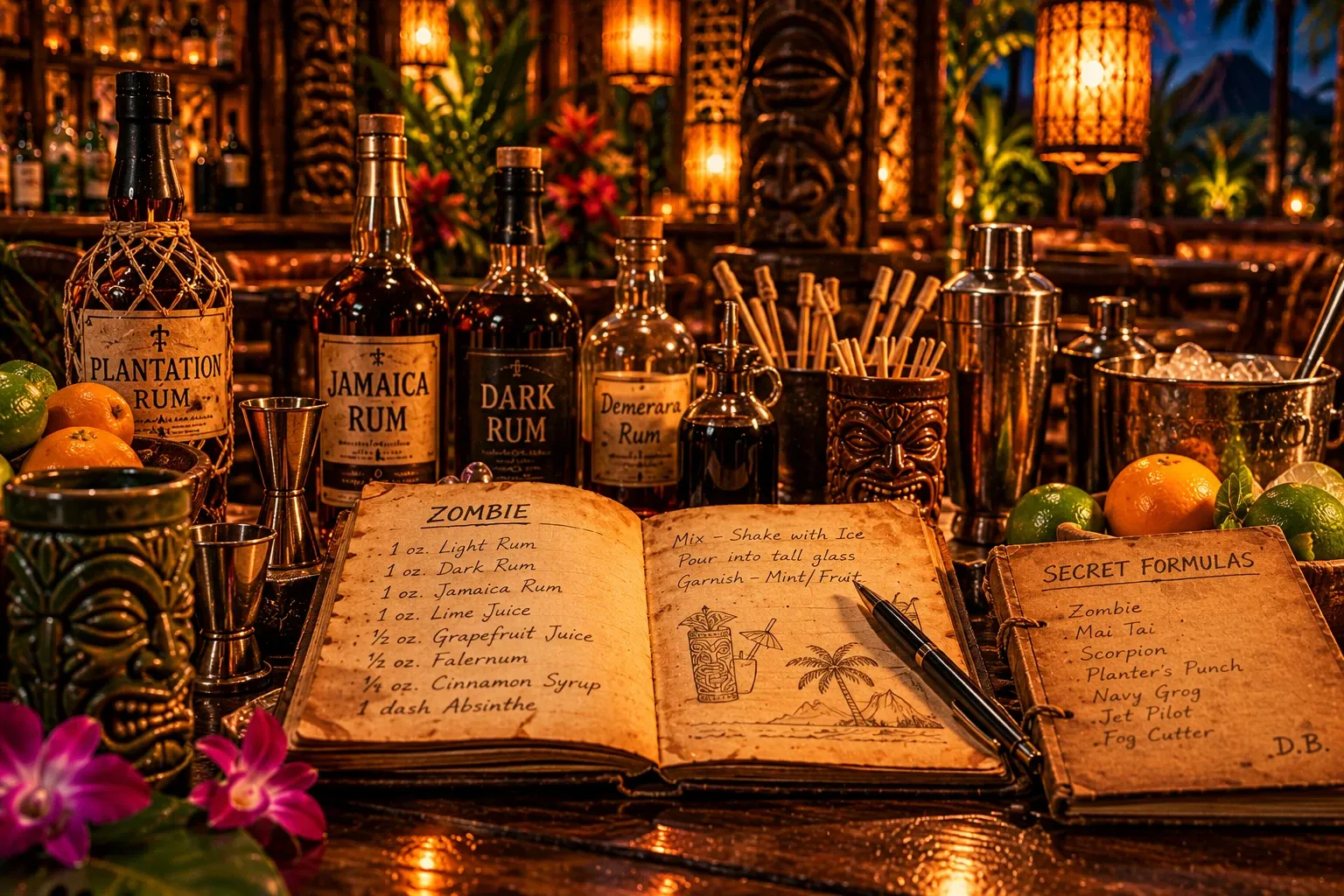
Donn Beach protected his formulations with coded instructions and proprietary mixes. Some ingredients were assigned numbers rather than descriptive labels, making it harder for competitors, and even some employees, to recreate the drinks from memory.
Secrecy had an obvious business purpose. If customers came specifically for a Zombie or a carefully blended grog, keeping that formula exclusive helped keep the bar distinctive.
It also created a problem for future historians.
When cocktails depend on closely held recipes, knowledge can disappear when a business closes or its bartenders move on. Decades later, cocktail historian Jeff “Beachbum” Berry spent years interviewing surviving bartenders, studying old documents, and working through coded recipes to recover lost drinks.
That work helped modern bartenders recognize that the earliest tropical cocktails were not simply kitschy novelties. They were an important branch of American cocktail craftsmanship.
Research history: The Oxford Companion to Spirits & Cocktails, Berry, Jeff “Beachbum”
The People Behind the Donn Beach Legend
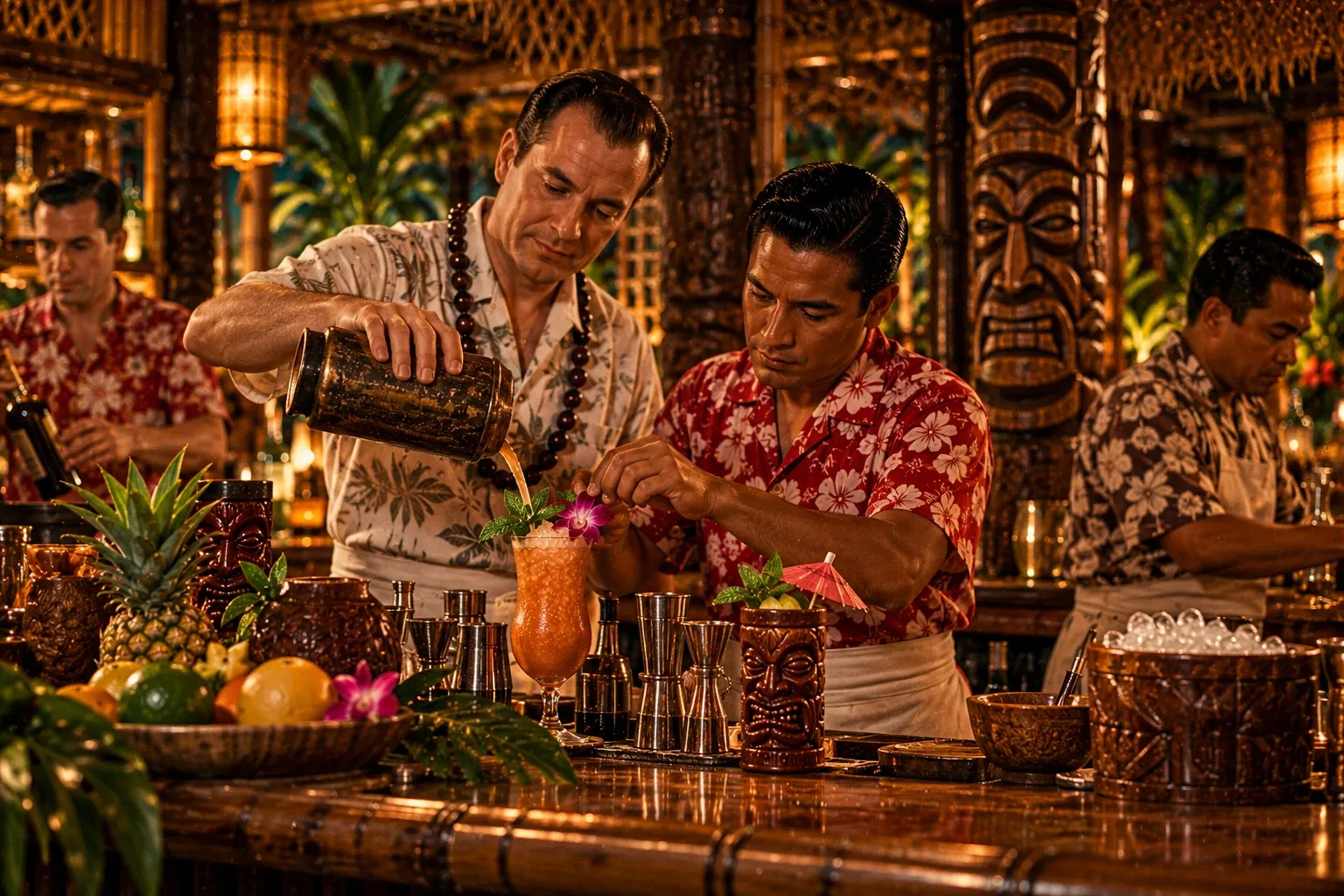
A colorful founder makes a compelling story. A successful restaurant, however, takes a lot more than a charismatic person with a good concept.
The people who helped build Don the Beachcomber are essential to understanding why it lasted.
Sunny Sund made a business out of an atmosphere
Cora Irene “Sunny” Sund was Donn's wife and business partner. She helped turn the early bar's appeal into a more substantial restaurant operation and oversaw expansion across the United States.
The move into a larger Hollywood location in 1937 was a major step. So was the decision to make food, dining, and the full evening experience integral to the concept. As the enterprise expanded, the business side grew increasingly important: staffing, consistency, locations, finances, service, and all the invisible work that makes a theatrical restaurant possible.
Donn and Sunny's marriage ended, but their business relationship did not immediately disappear. While Donn's adventures and personality drew headlines, Sund continued building the mainland restaurant operation, ultimately associated with a chain of about sixteen locations at its height.
Her role is particularly worth remembering because hospitality history has a habit of preserving the names on the signs better than the names of the people who managed the actual businesses.
Profile: Cocktail Kingdom Library, Cora Irene Sund
Detailed history: PBS SoCal
Ray Buhen helped define the drinks, then built his own legacy
The same problem appears behind the bar.
Ray Buhen, a Filipino bartender who worked at Don the Beachcomber, was among the professionals involved in the development of the drinks and service culture that made the place famous. The history is not accurately told as though every recipe and every successful service came from a single founder working alone.
Buhen later opened Tiki-Ti in Los Angeles in 1961. The small family-run bar became one of the most important surviving links to that early tropical cocktail tradition.
A historian of food and empire, Kerry Knerr, has specifically highlighted Buhen and Sund when examining how the familiar founder-centered version of the story obscures the restaurant's more complicated and collaborative history.
That is worth more than a passing acknowledgment. Without the bartenders who understood the formulas and the people who sustained the business, the tropical fantasy would not have become a repeatable form of hospitality.
Historical research: Culinary Historians of New York, Kerry Knerr, A Troubling Paradise
Venue and staff history: PBS SoCal
How a Hollywood Hideaway Became a National Idea
By the late 1930s, Don the Beachcomber wasn't just a novelty tucked into Hollywood. It was a recognizable restaurant concept with a reputation powerful enough to attract imitators.
The expanded restaurant combined elaborate drinks with food, décor, and service. Cantonese-influenced dishes appeared alongside the rum creations. To a modern reader, that combination of Caribbean cocktail technique, Chinese-American restaurant cooking, and imagery borrowed from multiple Pacific cultures may seem geographically incoherent.
It was.
That mixture makes more sense when we see it for what it was: a Hollywood-era commercial fantasy that assembled whichever elements seemed to convey a distant tropical world to American customers.
The formula proved influential. Victor Bergeron, whose Oakland establishment evolved into Trader Vic's, became the other major name in early tropical drinking and dining. Later operators adopted their own versions of the immersive setting, elaborate rum program, collectible menus, and a night-out-as-adventure approach.
Over time, the model moved beyond cocktail bars into larger destination restaurants, hotels, entertainment venues, and even suburban backyard décor.
By then, the name Don the Beachcomber represented more than one location. Yet the original insight remained unusually simple: make the customer feel transported from the first step inside.
Museum context: Smithsonian National Museum of American History, Set of Tiki Glasses
Profile: The Oxford Companion to Spirits & Cocktails, Beach, Donn
What About the Actual Pacific Islands?
There is a distinction that belongs in every responsible account of American tiki history.
Donn Beach created an American themed-entertainment and cocktail tradition. He did not invent the traditions, beliefs, visual cultures, or artistic practices of Hawaiian, Māori, Samoan, Tahitian, or other Pacific Island peoples.
American Polynesian Pop combined and reinterpreted imagery from places with distinct languages, identities, histories, and relationships to colonialism. Some of the symbols used for decoration had meanings far removed from the role they played in a restaurant. Calling the resulting environment “authentic Polynesian” would be inaccurate.
This history also has people in it whose perspectives weren't centered when the businesses were built. Pacific Islander artists and scholars have challenged the commodification of cultural and sacred imagery, including the way American entertainment reduced entire peoples to an imaginary island setting.
The Metropolitan Museum of Art has published the perspective of Pacific poet Dan Taulapapa McMullin, who addresses precisely that appropriation and erasure.
You can appreciate the ingenuity of Donn Beach's cocktails or the design of his restaurants while also recognizing the limits, and harms, of the world he was selling. The two ideas aren't mutually exclusive.
In fact, understanding the distinction gives the history more texture. It invites us to credit the people whose work made the experience possible, recognize the cultures from which commercial imagery was borrowed, and think more carefully about what deserves preservation today.
Pacific Islander perspective: Metropolitan Museum of Art, Tiki Manifesto
Why Don the Beachcomber Still Matters
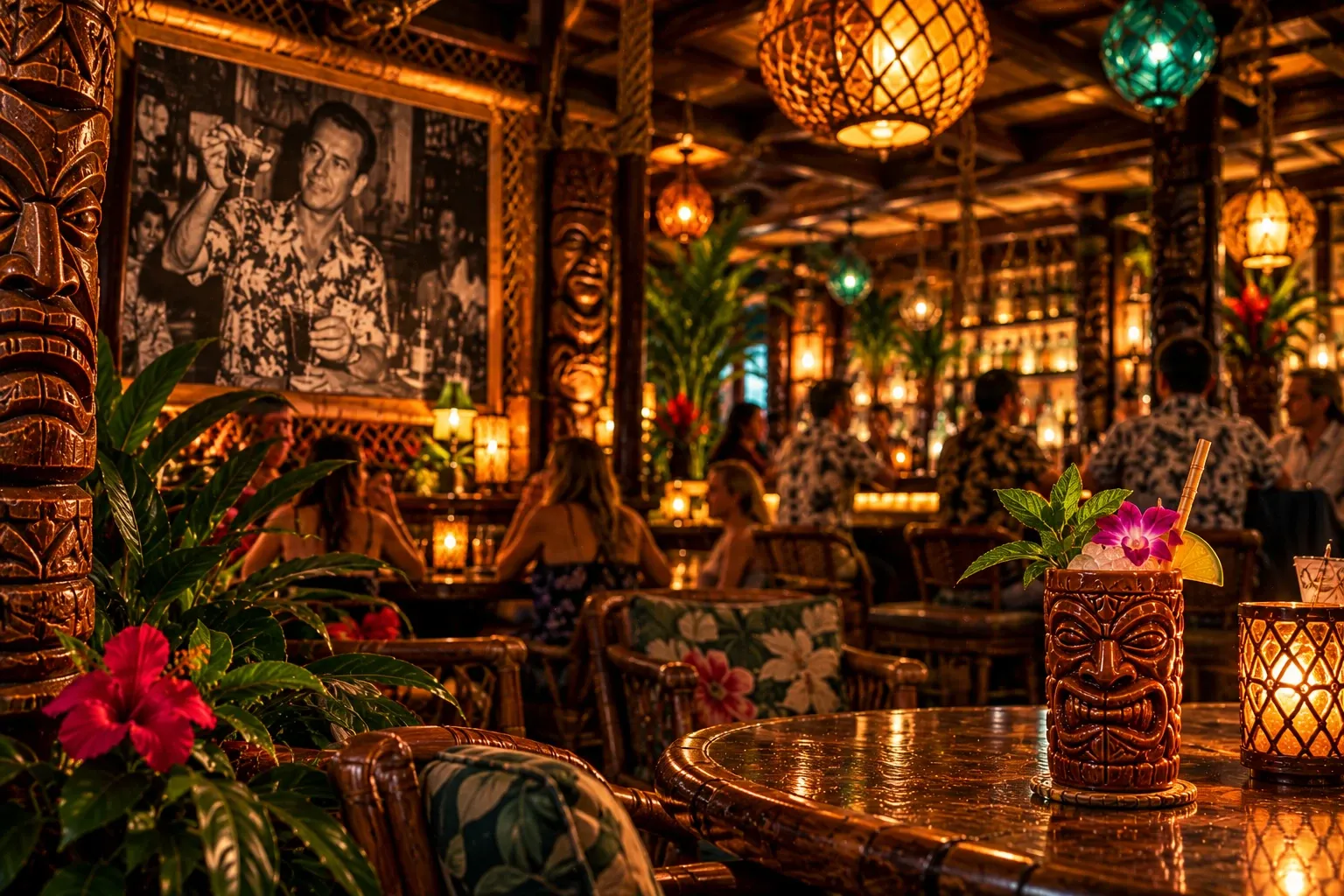
Plenty of themed restaurants have opened since the 1930s. Many have disappeared. A few have become landmarks.
Don the Beachcomber matters for something that extends beyond one address or one chain.
Donn Beach proved that the design of a restaurant could be the product, not just the setting in which the product was sold. He also proved that an imaginative room was no substitute for an excellent drink. The best version of his formula depended on both.
That lesson shows up everywhere now, including in restaurants, bars, resorts, and themed attractions in the Disney Bubble. The worlds may be different, but the underlying idea is familiar: storytelling happens through architecture, lighting, music, service, and all the details a guest encounters along the way.
There's also a reason the old recipes matter. When somebody takes the time to blend rums properly, balance fresh citrus, and build a cocktail with real care, they're recovering a little of the original craft instead of merely borrowing its visual language.
And when somebody documents the work of Sunny Sund, Ray Buhen, and other overlooked contributors, they're recovering the people behind the mythology.
That's the most useful way to remember Don the Beachcomber: not as a flawless founder of a perfect tradition, but as a remarkably influential beginning worth examining in full.
A Short Don the Beachcomber Timeline
| Era | What happened |
|---|---|
| Early 1930s | Donn Beach establishes the Hollywood bar known as Don's Beachcomber; sources disagree on the precise opening year. |
| 1934 | The Zombie becomes the signature early cocktail most closely associated with Beach. |
| 1937 | The operation expands into the better-known restaurant across North McCadden Place. |
| 1940s | Sunny Sund plays a central role in extending the concept into a national restaurant business. |
| 1961 | Former Don the Beachcomber bartender Ray Buhen opens Tiki-Ti in Los Angeles. |
| Late 20th century | The original restaurant empire fades, but its influence survives in drinks, design, and hospitality. |
| 1990s onward | Researchers and bartenders recover historic recipes and document the people and venues of the first tiki era. |
Frequently Asked Questions
Did Don the Beachcomber invent the tiki bar?
Donn Beach is widely credited with establishing the prototype for the American tropical cocktail bar. Its influence came from combining elaborate rum drinks, immersive décor, food, and theatrical service into a recognizable format. “Tiki bar” is a later label for the early establishment.
Did Don the Beachcomber open in 1933 or 1934?
Historical accounts differ. Many sources cite 1933, while other references use 1934. Research drawing on Donn Beach's archives has also raised the possibility that an unlicensed version existed in 1932. It is safest to describe the beginning as the early 1930s unless discussing the disagreement explicitly.
Did Don the Beachcomber invent the Mai Tai?
The Mai Tai is primarily associated with Trader Vic, whose account dates his creation to 1944, though competing origin stories have circulated. Donn Beach is most securely associated with the Zombie and a number of other complex rum cocktails.
What was Don the Beachcomber's most famous drink?
The Zombie. Its complex recipe, high-proof reputation, and widely reported limit of two per guest helped make it an icon of early tropical cocktail culture.
Who was Sunny Sund?
Cora Irene “Sunny” Sund was Donn Beach's business partner and former wife. She was central to expanding and operating the restaurant business beyond its original Hollywood location.
Is Don the Beachcomber the same as traditional Polynesian culture?
No. It is part of American Polynesian Pop, a commercial cocktail, design, and entertainment tradition that blended influences and borrowed imagery from multiple places. Hawaiian and other Pacific Island cultures have their own living traditions and distinct histories.
The Original Magic Was in the Details
When I think about why Don the Beachcomber still deserves an article nearly a century after its beginnings, it isn't because I want every modern tiki bar to look exactly like a Hollywood hideaway from the 1930s.
It's because somebody realized that the difference between an ordinary night out and a memorable one could be the thought invested in the details.
A drink with actual balance. A room that creates a mood. A server who understands the experience. A story that begins before the first sip.
But the fuller history gives us something better than nostalgia. It gives us the names behind the business, the bartenders behind the cocktails, and a clearer view of the cultural borrowing embedded in the fantasy.
That is a more interesting legacy than any single origin myth.
To explore how this original Hollywood idea grew into a national phenomenon, continue with The Rise, Fall, and Revival of American Tiki. For more histories, venues, and collecting stories, visit our Tiki & Hawaiiana collection. If you'd like the Florida version of this story, explore Florida's Real Tiki Bars.
Adventure looks better in a Hawaiian shirt.