
Field Notes · October 27, 2026 · Tiki Culture & History
What Is Tiki Culture? A Beginner's Guide to Polynesian Pop
Where tiki culture began, the 10 classic cocktails that defined it, the books that preserved its history, and how to enjoy Polynesian Pop with its full context in mind.
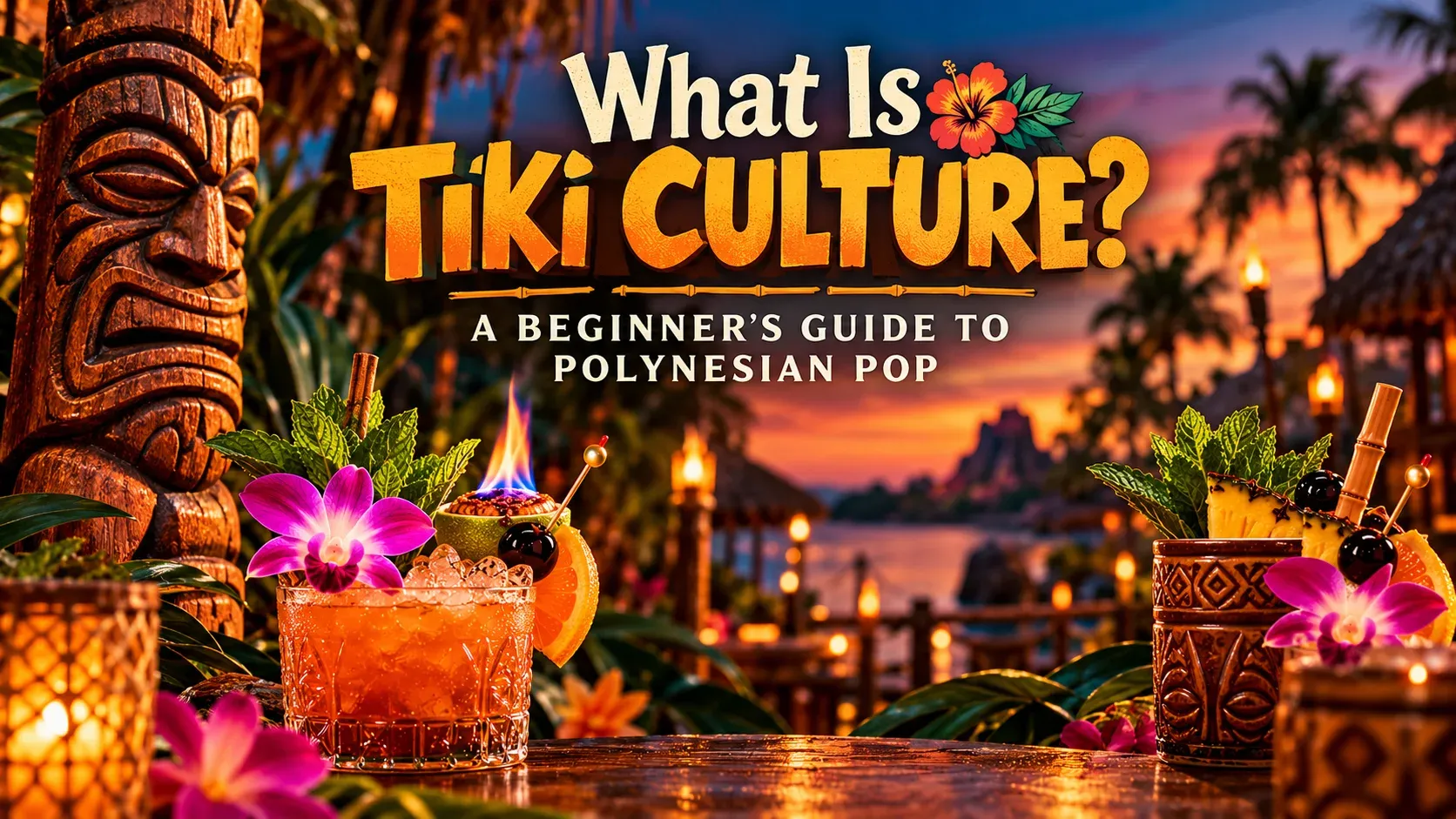
There is a particular kind of magic that happens when you walk into a great tiki bar.
The lighting gets a little darker. Bamboo, carved wood, and tropical details replace the ordinary world outside. Somewhere behind the bar, someone is measuring rum, squeezing fresh lime, and preparing a cocktail that probably requires more ingredients than your last three dinners combined.
A record plays. A mysterious-looking ceramic mug arrives. For a little while, wherever you were going and whatever you were worrying about can wait.
That's the appeal of tiki.
But behind the rum drinks, carved figures, Hawaiian shirts, and elaborate surroundings is a fascinating piece of American cultural history. It's a story involving adventurous bartenders, Hollywood, postwar prosperity, music, design, and the enduring human desire to escape somewhere else.
It's also a story that deserves to be told carefully, because the fantasy world Americans created borrowed heavily from real Pacific Island cultures with their own histories, identities, and traditions.
So what exactly is tiki culture? Where did it begin? And why are people still drawn to it nearly a century after the first modern tropical cocktail bars appeared?
Let's explore.
What Exactly Is Tiki Culture?
Tiki culture, in its modern American sense, is a style of tropical-themed entertainment, drinking, dining, art, and design that developed in the United States during the twentieth century.
Often called Polynesian Pop, it combined romanticized imagery of the South Pacific with Caribbean-inspired cocktails, Asian-influenced restaurant food, tropical décor, music, and theatrical hospitality.
The result was something that existed more in the American imagination than on any actual island.
You didn't need to travel thousands of miles to experience it. You could walk through a restaurant door in California, order an elaborate rum cocktail, and spend an evening surrounded by bamboo, nautical objects, carved artwork, and the sounds of an imagined tropical paradise.
That promise of escape was the whole point.
The Smithsonian's National Museum of American History documents how businesses such as Don the Beachcomber and Trader Vic's helped introduce Americans to these highly stylized environments, which later spread to smaller independent bars and home-entertaining spaces.
Source: Smithsonian, Set of Tiki Glasses
The five elements of classic tiki
Although tiki establishments vary considerably, five elements help define the tradition.
1. Immersive atmosphere. A well-designed tiki bar creates an environment that feels separate from the outside world. Lighting, music, furnishings, artwork, and architectural details all work together.
2. Elaborate tropical cocktails. Classic tiki drinking is built around thoughtfully constructed beverages, often involving rum, citrus, spices, syrups, and complex flavor combinations.
3. Distinctive art and design. Ceramic mugs, carvings, bamboo, rattan, tropical imagery, and nautical objects became recognizable elements of the American tiki aesthetic.
4. Music and entertainment. From midcentury exotica recordings to live entertainment and theatrical effects, sound and spectacle helped complete the experience.
5. Escapism. More than anything else, tiki offers a temporary departure from ordinary life.
That last element explains why tiki has survived changing fashions and generations of cocktail trends.
It isn't simply a drink category or decorating style.
It's an experience.
Where Did Tiki Culture Begin?
The modern American tiki movement emerged during the 1930s, but the cultural influences behind it stretch much further back.
During the nineteenth and early twentieth centuries, Americans encountered romanticized images of the Pacific through travel writing, fiction, exhibitions, music, tourism, and popular entertainment.
The Smithsonian's history of tiki, drawing on the expertise of bartender and author Martin Cate, connects the movement to earlier American fascination with South Pacific adventure stories and Hawaiian music.
Source: Smithsonian Magazine, There's More to Classic Tiki Than Just Kitsch
Those influences created an audience receptive to tropical fantasy.
But transforming that fascination into a recognizable restaurant and cocktail experience would take an unusually imaginative bartender.
Don the Beachcomber: The beginning of modern tiki
Ernest Raymond Beaumont-Gantt, later known as Donn Beach, was one of the central figures in the creation of American tiki.
In the early 1930s, he established a South Seas-themed drinking destination in Hollywood that became known as Don the Beachcomber.
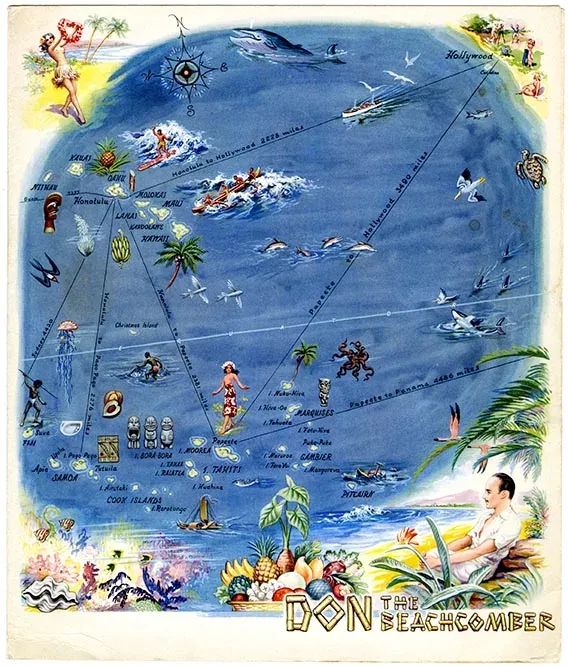
The precise opening year varies across published histories. Smithsonian Magazine places it in 1933, while The Oxford Companion to Spirits & Cocktails dates it to 1934.
What isn't seriously in doubt is the establishment's importance.
Donn Beach created a convincing theatrical environment, but the greatest innovation was happening behind the bar.
Rather than preparing straightforward rum punches, he developed complex cocktails incorporating multiple spirits, fresh juices, spices, and flavored syrups.
The drinks drew heavily from Caribbean cocktail traditions, especially Planter's Punch, but took those foundations in inventive directions.
According to The Oxford Companion to Spirits & Cocktails, Donn Beach's approach helped create a distinctly new category of American cocktail.
Source: Oxford Companion, Donn Beach
His establishment attracted attention and inspired imitators.
Tropical escapism was becoming a commercial phenomenon.
Trader Vic: Bringing tiki to a wider audience
Across California, another entrepreneur was developing an establishment that would become equally important.
Victor Bergeron operated a bar called Hinky Dinks in Oakland, California.
The main Trader Vic's company history dates its opening to 1934. It identifies 1938 as the year the establishment transformed into Trader Vic's, adopting its better-known tropical identity.
Bergeron drew inspiration from established cocktail destinations, including Don the Beachcomber, while developing his own drinks, food, and style of hospitality.
His restaurants eventually helped introduce tropical cocktails and themed dining to customers far beyond California.
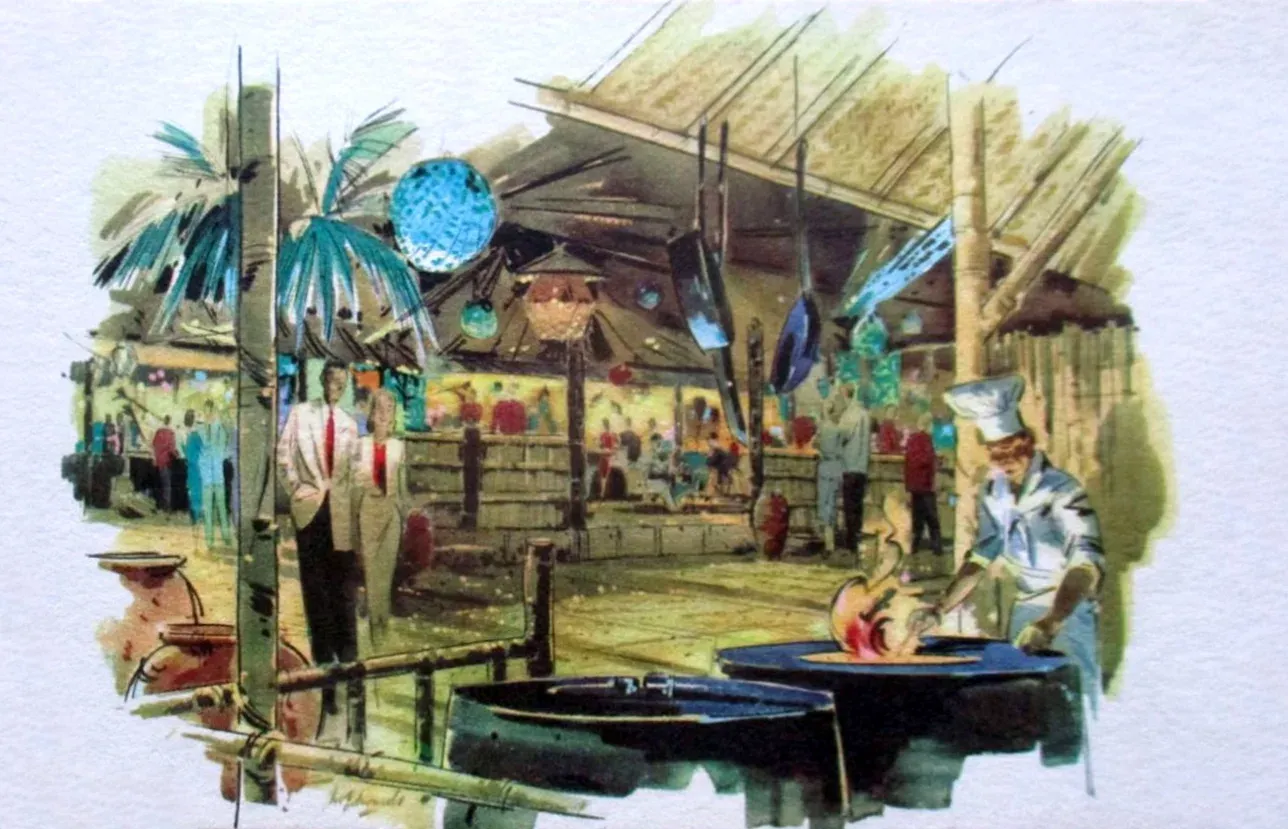
Trader Vic's also popularized one of the most recognizable drinks in cocktail history: the Mai Tai.
Source: Trader Vic's Official History
Donn Beach and Trader Vic were competitors, innovators, and central figures in the development of modern American tiki.
Their contributions established a formula that other restaurants, bars, and entertainers would adapt for decades.
The Golden Age of Tiki
Tiki's greatest expansion came after World War II.
For many Americans, the postwar years brought greater disposable income, expanding leisure opportunities, suburban growth, and growing interest in travel.
Tropical destinations held considerable appeal. At the same time, restaurants could offer a more affordable version of the imagined experience without requiring customers to board a plane.
The Smithsonian connects the growth of themed tropical dining to Americans' increasing fascination with travel and leisure after the war.
That fascination was often shaped by idealized, sometimes inaccurate representations of distant places. Nevertheless, the aesthetic spread rapidly.
Tiki restaurants became elaborate environments filled with theatrical details.
The attraction was more than the menu.
A visit might offer dramatic interiors, unusual cocktails, shared food presentations, distinctive ceramic vessels, and an atmosphere unlike the typical neighborhood restaurant.
Some establishments became destinations in their own right.
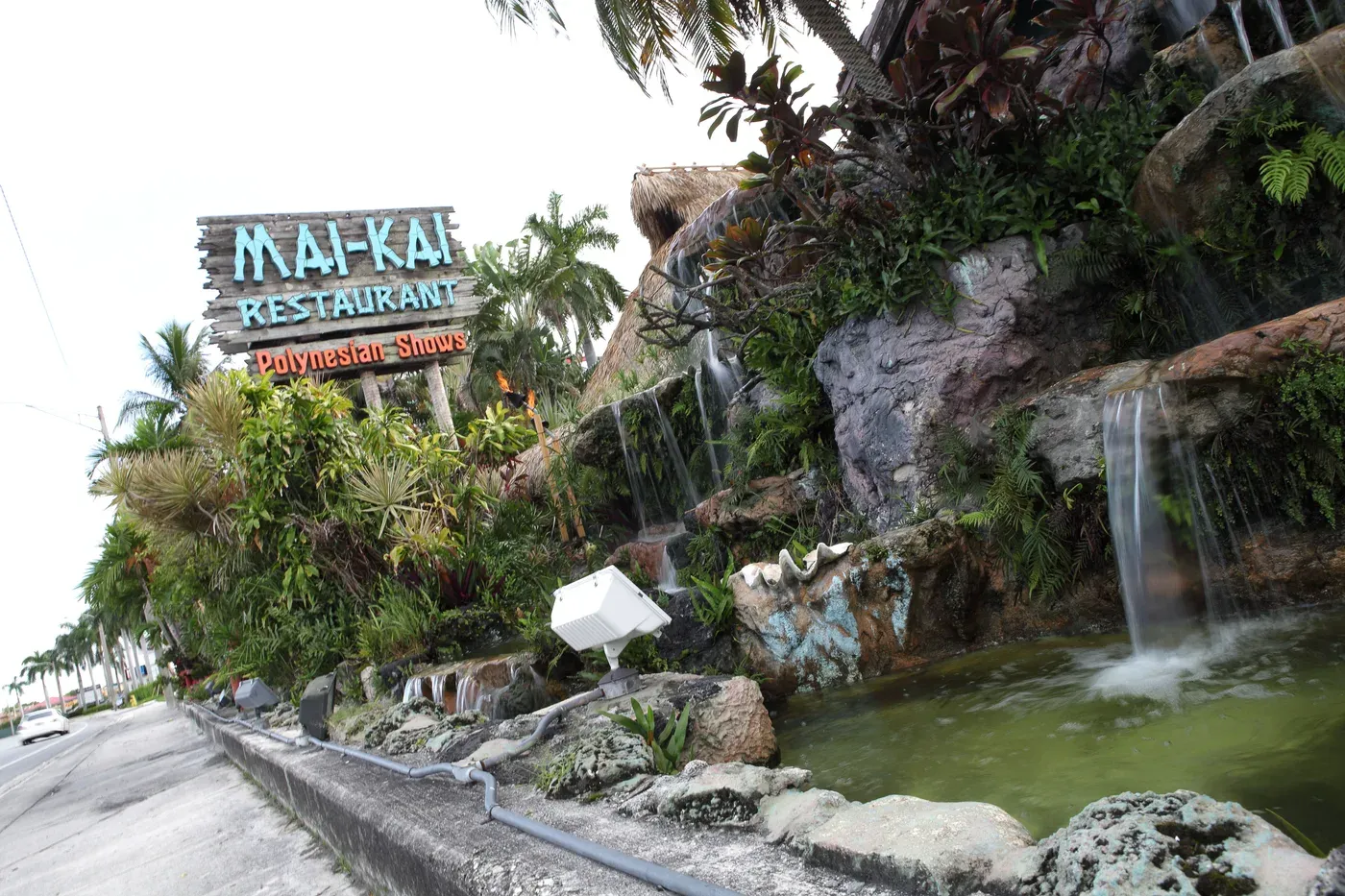
One important surviving example is the Mai-Kai in Fort Lauderdale, Florida, which opened in 1956 and became part of the American tiki tradition.
When tiki came home
The tiki craze wasn't limited to restaurants.
It influenced suburban patios, home bars, entertaining, decorative objects, and collecting.
Ceramic tiki mugs and tropical-themed serving vessels became souvenirs and conversation pieces.
The Smithsonian's collection includes historical tiki barware associated with this era. Its documentation explains how restaurant-specific ceramic vessels eventually attracted collectors and inspired later reproductions.
Source: National Museum of American History, Tiki Glasses
For enthusiasts today, these artifacts offer a tangible connection to midcentury design and hospitality history.
And that helps explain why tiki collecting has become an important part of the modern scene.
10 Classic Tiki Cocktails That Defined the Culture
You can have tropical décor without a classic tiki cocktail. But remove the cocktails from the history of American tiki, and you lose one of its greatest creative contributions.
The original drinks were far more sophisticated than the stereotype of rum mixed with pineapple juice.
Donn Beach and Victor "Trader Vic" Bergeron developed cocktails that combined multiple spirits, fresh citrus, carefully prepared syrups, spices, bitters, and imaginative presentation.
Their creations established an entirely new approach to American cocktail culture.
In fact, cocktail historian Jeff "Beachbum" Berry argues in The Oxford Companion to Spirits & Cocktails that Donn Beach's drinks anticipated many of the principles associated with the modern craft cocktail movement.
Source: The Oxford Companion to Spirits & Cocktails, Tiki
These ten drinks help tell the story of that evolution.
1. Zombie: The Cocktail That Helped Launch the Craze
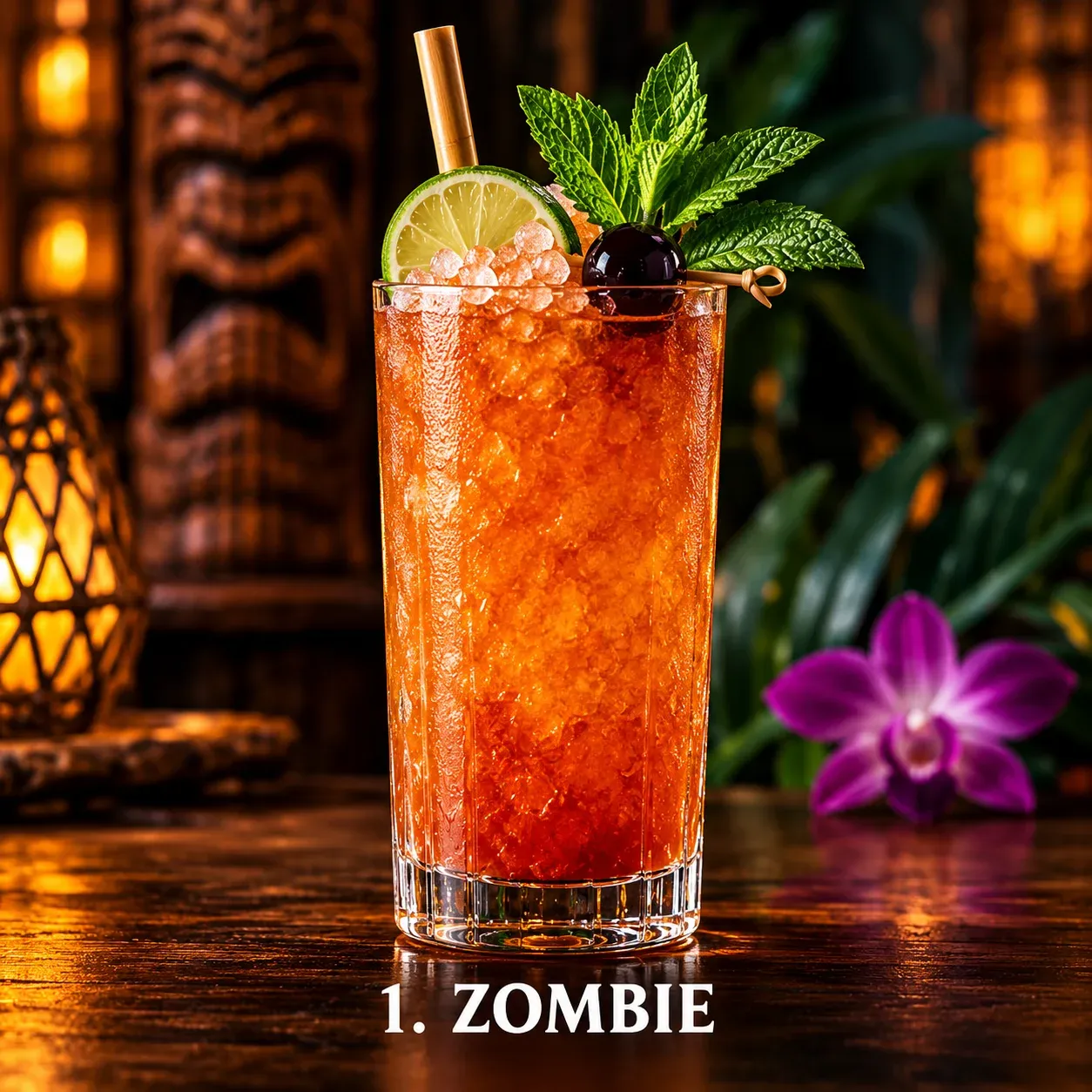
Created by Donn Beach in Hollywood in 1934, the Zombie became one of tiki's earliest sensations.
Its reputation for extraordinary strength attracted attention, and Beach famously limited customers to two Zombies.
But beyond the publicity was a cocktail built around a sophisticated combination of rums, citrus, spices, and sweeteners.
The Zombie demonstrated how multiple ingredients could produce a complex, balanced drink.
It also proved that an unusual cocktail could become an attraction in its own right.
Historical source: The Oxford Companion, Zombie
2. Mai Tai: Tiki's Most Enduring Classic
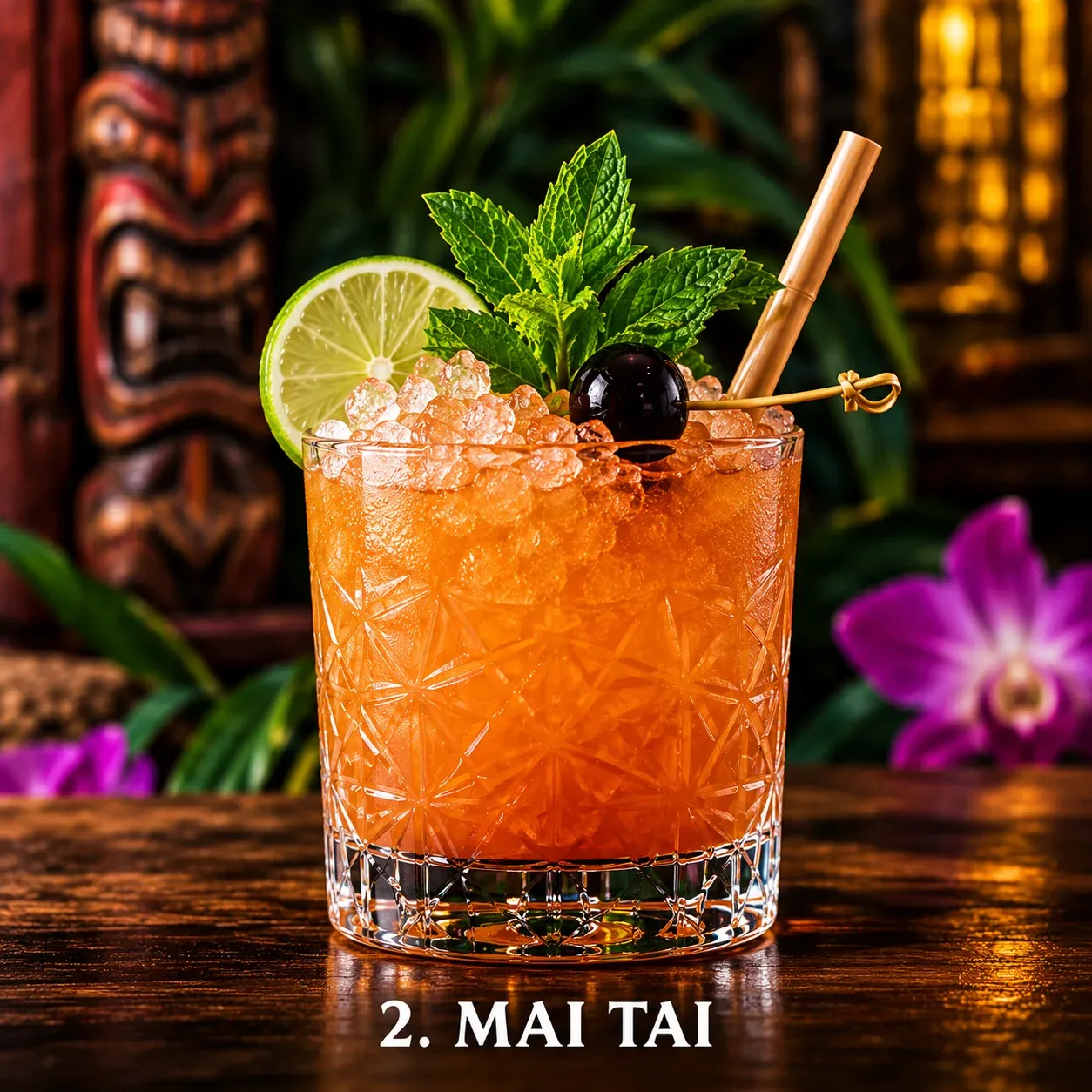
Few drinks have become as closely associated with tropical escapism as the Mai Tai.
Victor "Trader Vic" Bergeron is generally credited with creating it in Oakland in 1944.
The original formula combined Jamaican rum, fresh lime juice, orange curaçao, orgeat, and a little sugar syrup.
Its enduring appeal comes from the balance of rum, citrus, and almond rather than an abundance of fruit juice.
The drink later became strongly associated with Hawaii, where hotel and resort variations helped spread its popularity.
Competing origin claims have circulated for decades, although historical research generally credits Bergeron.
Historical source: The Oxford Companion, Mai Tai
3. Navy Grog: Rum Blending as an Art Form
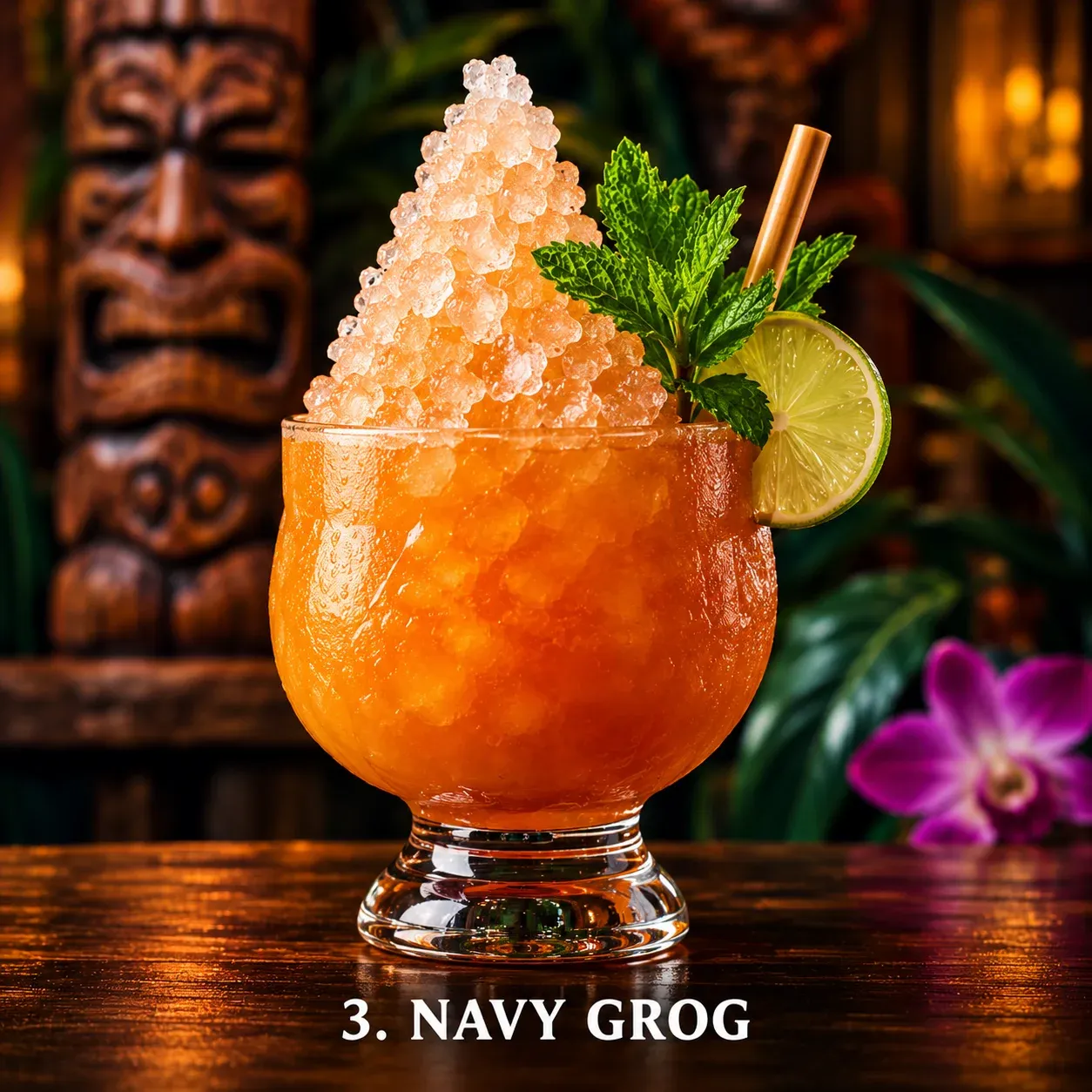
Navy Grog is another influential cocktail associated with Donn Beach.
The drink helped demonstrate how different rums could be combined to produce flavors that a single spirit couldn't provide.
Historic interpretations incorporate citrus and sweeteners, with the exact ingredients varying between establishments.
Trader Vic's developed its own well-known approach to the drink.
Navy Grog also became associated with distinctive ice presentations, including the ice cone that appears in some traditional versions.
Its history provides an excellent introduction to why rum selection matters so much in classic tiki bartending.
Historical source: The Oxford Companion, Donn Beach
4. Fog Cutter: Three Spirits and a New Kind of Mug
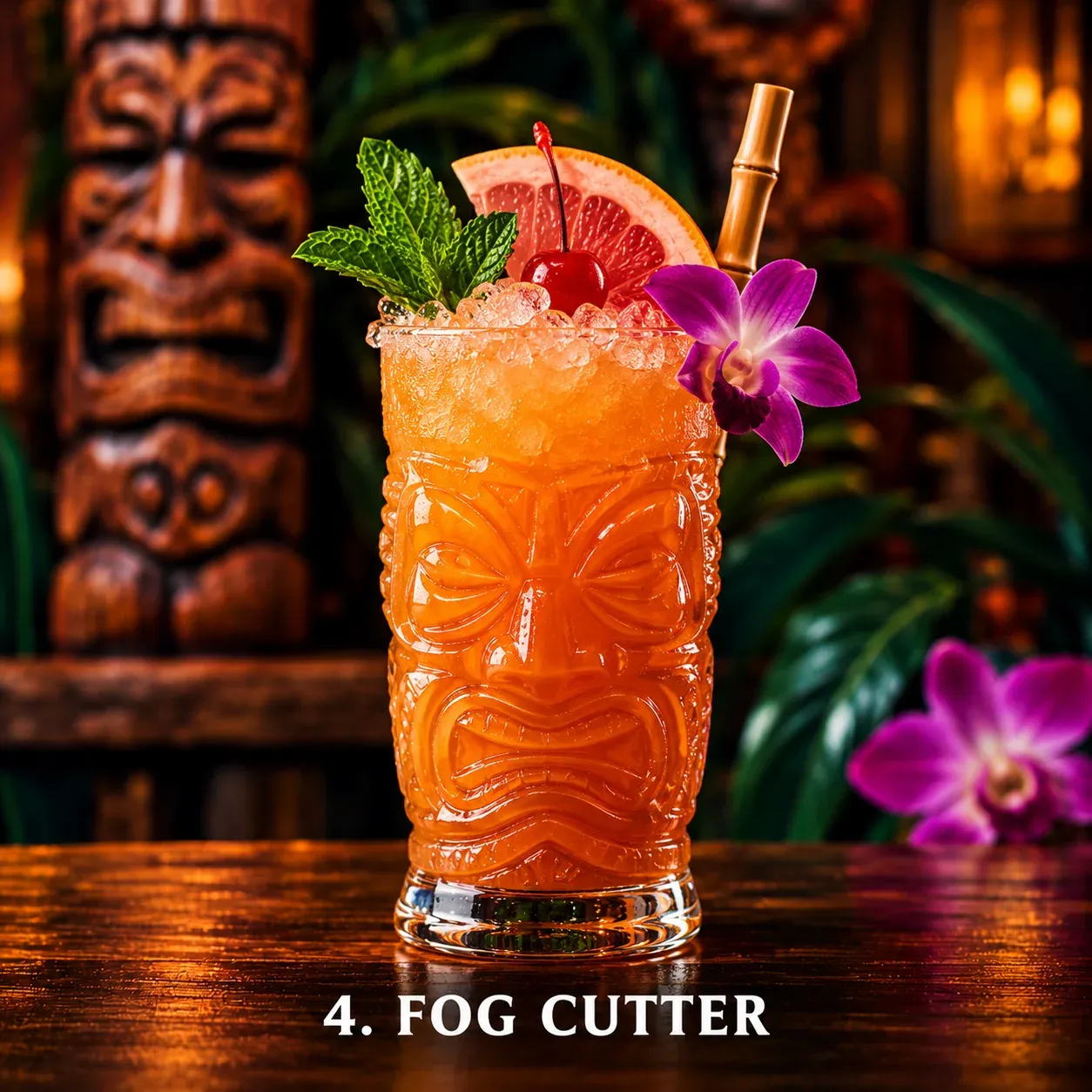
Trader Vic's Fog Cutter demonstrates the experimentation that made early tropical cocktails distinctive.
Developed by 1940, it combines rum, brandy, gin, citrus, orgeat, and a sherry float.
That unusual combination works as more than a novelty. The different spirits contribute complementary flavors, while the citrus and almond syrup bring the drink together.
The Fog Cutter also played an important role in the development of tiki barware.
According to The Oxford Companion to Spirits & Cocktails, it was the first tiki cocktail served in a specially designed ceramic mug.
The connection between elaborate drinks and collectible vessels would become a hallmark of tiki culture.
Historical source: The Oxford Companion, Fog Cutter
5. Scorpion Bowl: The Social Side of Tiki
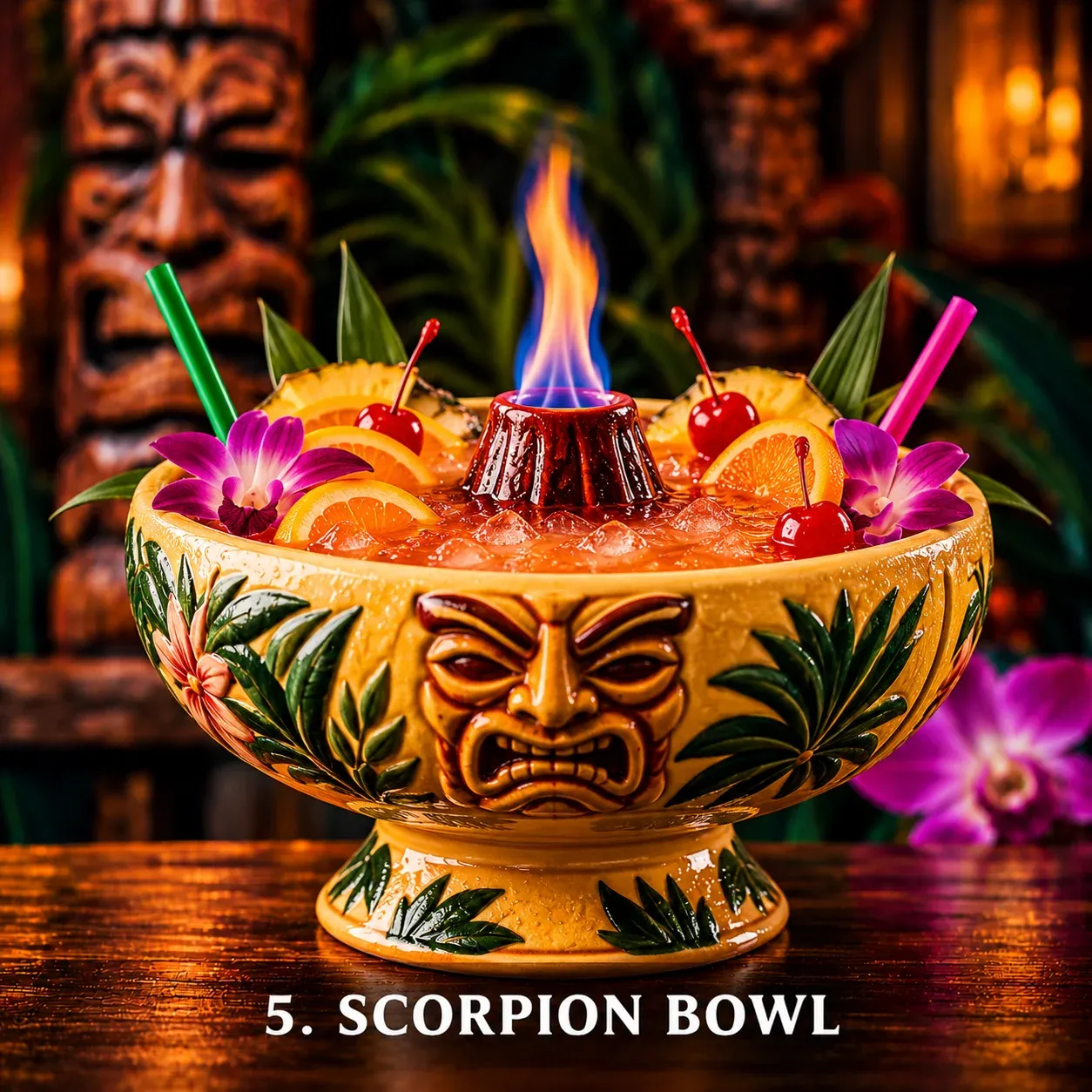
Some tiki cocktails were designed to be shared.
Trader Vic's Scorpion became one of the best-known examples.
Instead of arriving in an individual glass, the drink was served in a large decorative ceramic bowl with multiple straws.
The presentation turned ordering a cocktail into a shared experience.
The Scorpion's development also illustrates how tiki bartenders borrowed from older punch traditions while creating something uniquely suited to themed restaurants.
Cocktail historians have investigated its connection to Bergeron and earlier drinking traditions in Hawaii.
Historical source: David Wondrich, The Mysterious Origins of the Tiki Classic Scorpion Bowl
6. Pearl Diver: A Lost Cocktail Rediscovered
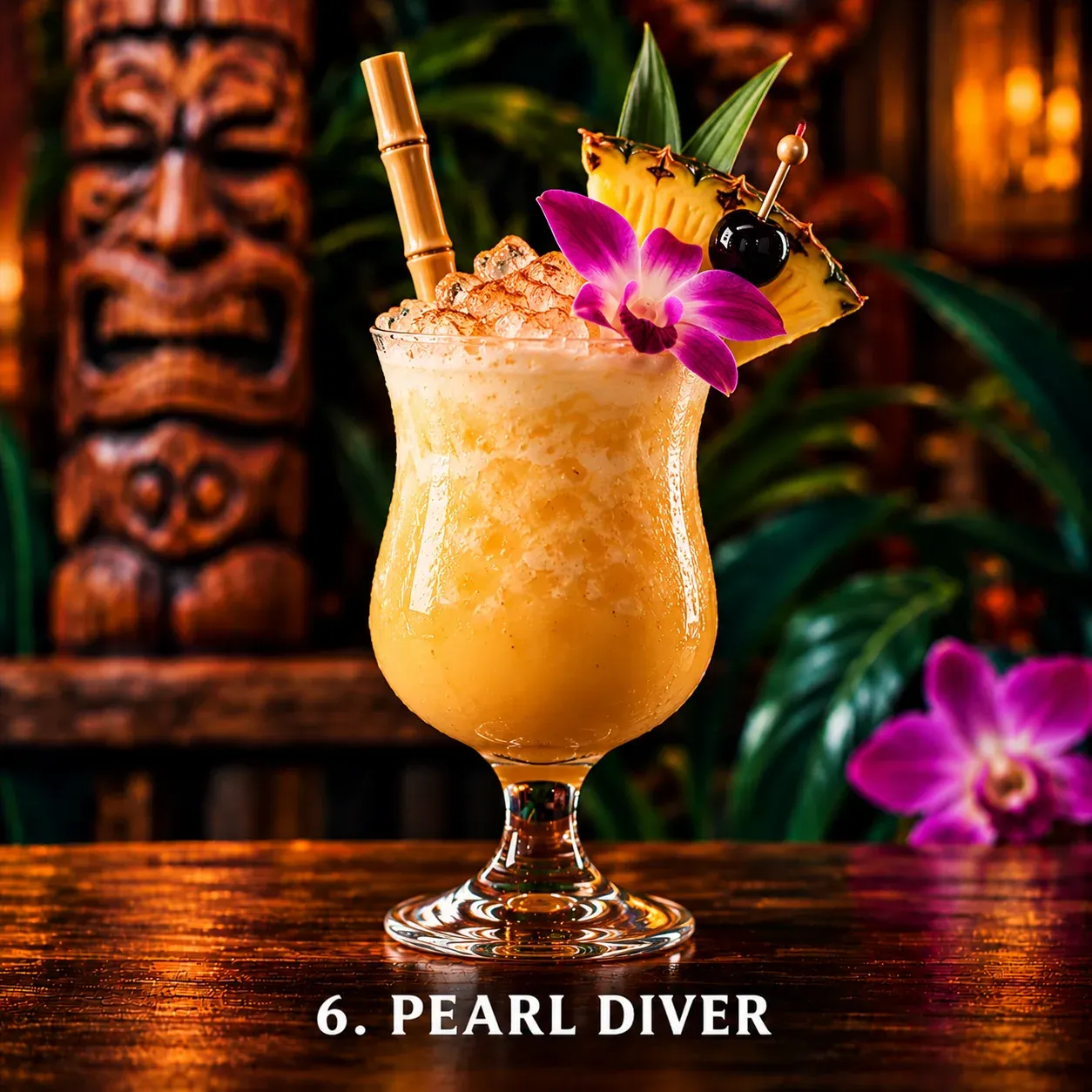
The Pearl Diver is a fascinating example of how sophisticated tiki recipes nearly disappeared.
Created by Donn Beach, the cocktail is associated with a rich ingredient preparation known as Gardenia Mix, incorporating buttery, spiced, and sweet elements.
It also became known for its distinctive glassware.
Because Beach closely guarded his recipes, later researchers faced considerable challenges reconstructing the original drinks.
Jeff "Beachbum" Berry helped recover the Pearl Diver through historical bartender records and published his findings in Sippin' Safari.
Its rediscovery helped demonstrate that tiki's forgotten cocktails contained genuine technical achievements.
Historical source: VinePair, The Pearl Diver
7. Missionary's Downfall: A Fresher Side of Tiki
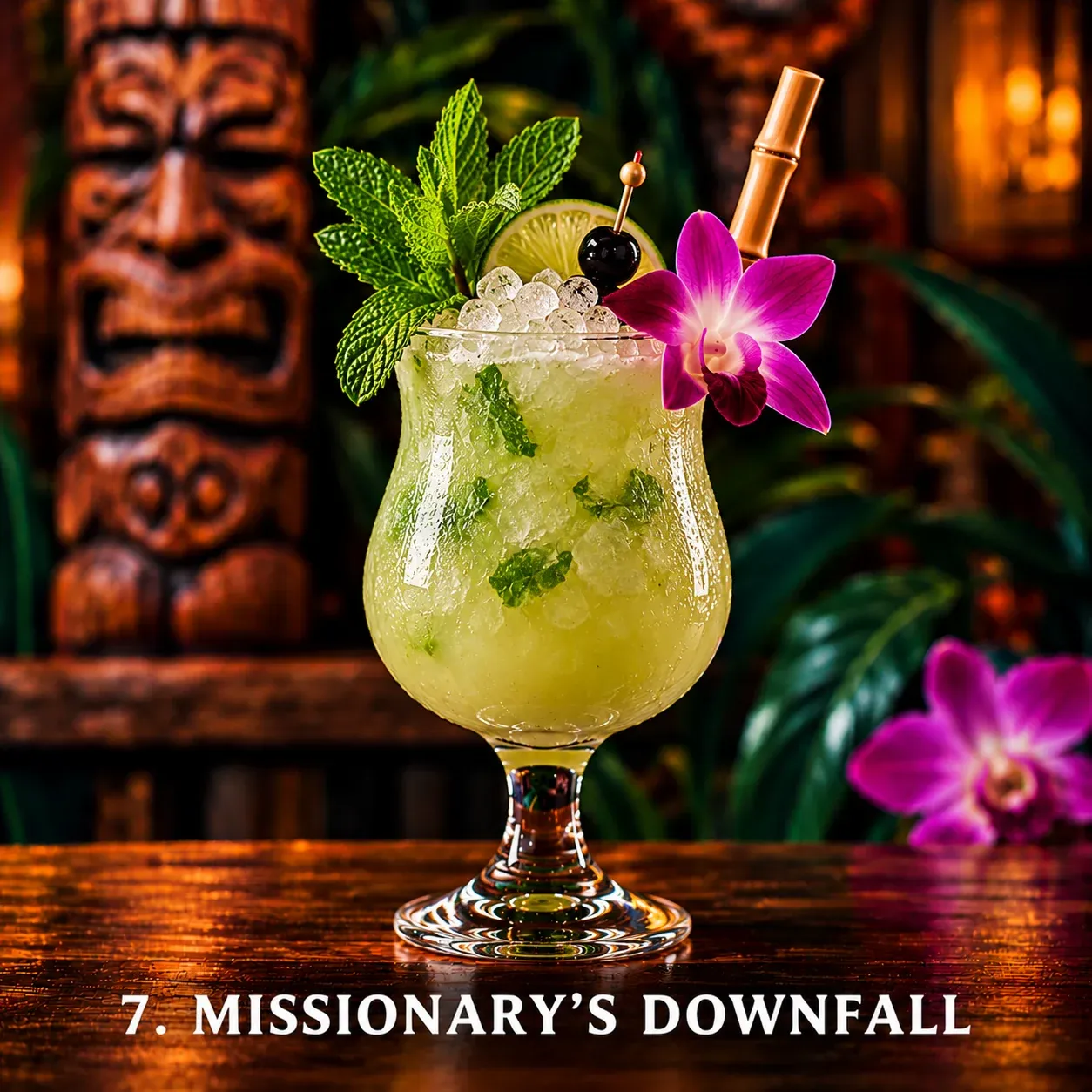
Not every classic tiki drink was designed to be a powerhouse of rum.
Donn Beach's Missionary's Downfall offers a lighter, refreshing expression of tropical cocktail craftsmanship.
Traditional interpretations combine rum, mint, peach, honey, pineapple, and fresh citrus.
The result is aromatic, herbal, and fruit-forward without needing to be excessively sweet.
Recipes have changed over the decades, and contemporary bartenders have developed different approaches to its preparation.
The Missionary's Downfall is a useful reminder that tiki's original repertoire was more diverse than its strongest drinks might suggest.
Recipe and history: Liquor.com, Missionary's Downfall
8. Three Dots and a Dash: A Cocktail With a Wartime Name
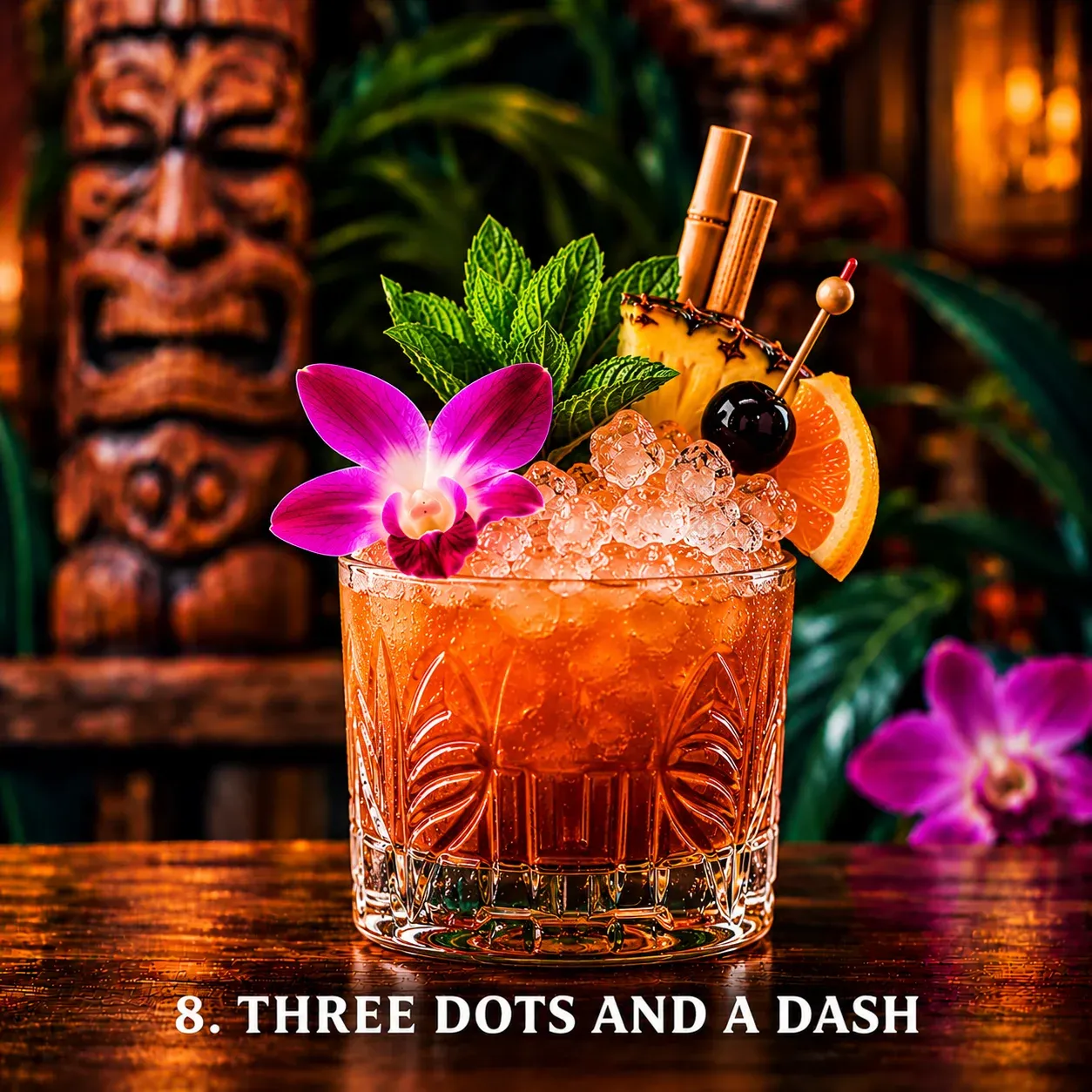
The name Three Dots and a Dash refers to the Morse code letter V, a symbol of victory associated with World War II.
The cocktail originated in Donn Beach's midcentury repertoire.
Its complex flavor profile incorporates rum, citrus, honey, and spices, with variations appearing in later recreations.
The precise original recipe and parts of its early history are not completely documented, largely because Beach protected many of his formulas.
Nevertheless, the cocktail survived through historical research and modern interpretations.
It remains an excellent example of the balance between spice, acidity, sweetness, and rum that defines sophisticated tiki drinks.
Historical discussion: VinePair, Three Dots and a Dash
9. Rum Barrel: The Drink That Made the Vessel Part of the Experience
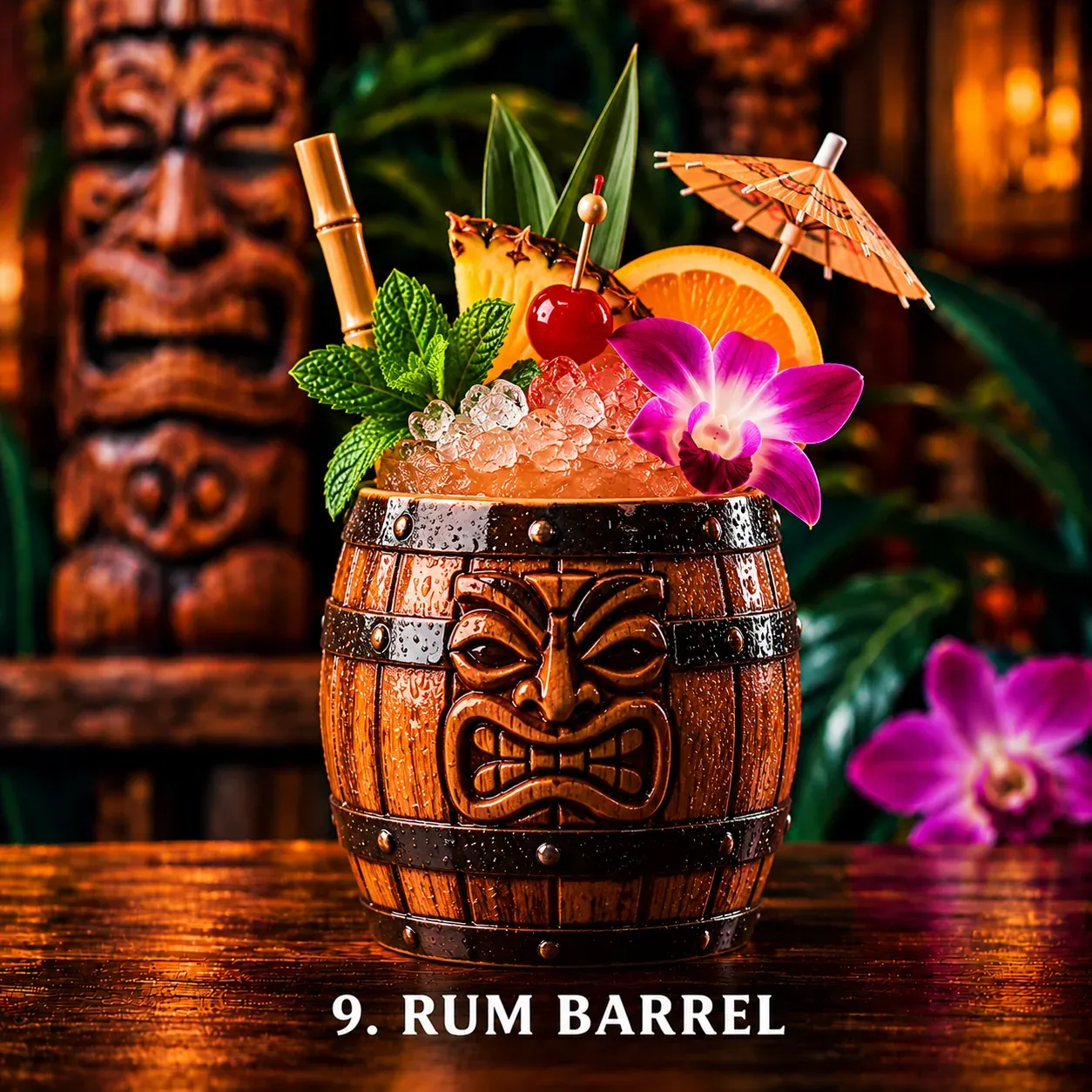
The Rum Barrel was part of Donn Beach's historic cocktail repertoire.
It became associated with the practice of serving tropical rum drinks in specially designed barrel-shaped vessels.
The presentation connected cocktails with the nautical and adventurous themes that appeared throughout American tiki.
Like other classics, Rum Barrel recipes varied over time and between establishments.
Its significance lies partly in the combination of elaborate drink preparation and memorable presentation.
The experience wasn't merely about what the customer was drinking.
The vessel helped tell the story.
Historical source: The Oxford Companion, Donn Beach
10. Jet Pilot: Tiki Enters the Jet Age
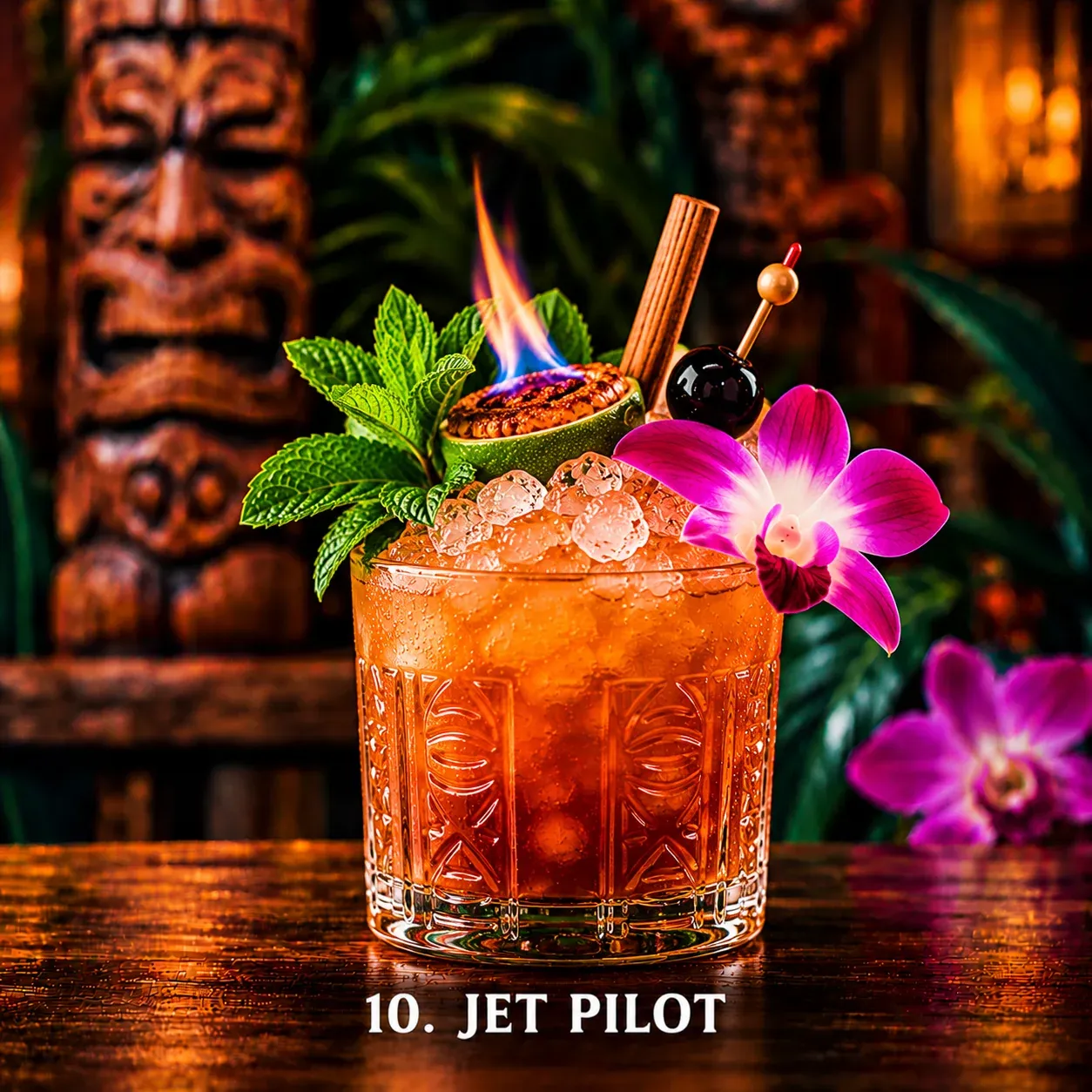
As tiki expanded during the 1950s, new establishments continued developing cocktails influenced by its early pioneers.
The Jet Pilot became associated with Steve Crane's Luau restaurant in Beverly Hills.
A late-1950s version documented by Jeff Berry combines several rums, lime, grapefruit, cinnamon syrup, falernum, bitters, and anise notes.
Its construction reflects many of Donn Beach's earlier techniques while adding a distinctly postwar identity.
The Jet Pilot demonstrates that classic tiki was never limited to the drinks created during the 1930s and 1940s.
The tradition continued evolving as new bartenders, establishments, and audiences embraced tropical cocktail culture.
Historical source: Distiller, Jet Age Cocktails
Why These Ten Drinks Matter
Taken together, these cocktails reveal several defining characteristics of classic tiki.
They demonstrate sophisticated rum blending, carefully balanced flavors, imaginative presentation, and the importance of memorable experiences.
They also explain why modern bartenders have spent decades researching and restoring historic tropical recipes.
Tiki's cocktail legacy isn't simply a collection of sweet vacation drinks.
It's an important chapter in the history of American mixology.
And whether you're ordering your first Mai Tai or exploring a lesser-known classic like the Pearl Diver, understanding the history behind the glass adds another dimension to the experience.
The Look, Sound, and Atmosphere of Tiki
A great tiki environment is designed to change how a place feels.
The effect depends on far more than attaching bamboo to the walls.
The art of tropical immersion
Classic tiki interiors could include rattan furnishings, textured walls, warm lighting, nautical objects, carved figures, artificial foliage, and elaborate decorative details.
The goal was to create a consistent atmosphere.
Some spaces emphasized the feeling of an imagined island village. Others borrowed from seafaring adventure, tropical gardens, or stylized South Seas mythology.
Modern tiki designers continue to reinterpret these influences.
The best examples understand that immersion is built through dozens of coordinated details.
Even the light matters.
Too bright, and a carefully designed bar can lose its sense of mystery.
Get the atmosphere right, and the room becomes part of the experience.
Tiki mugs: Drinking vessels become collectibles
One of tiki's most recognizable objects is the ceramic mug.
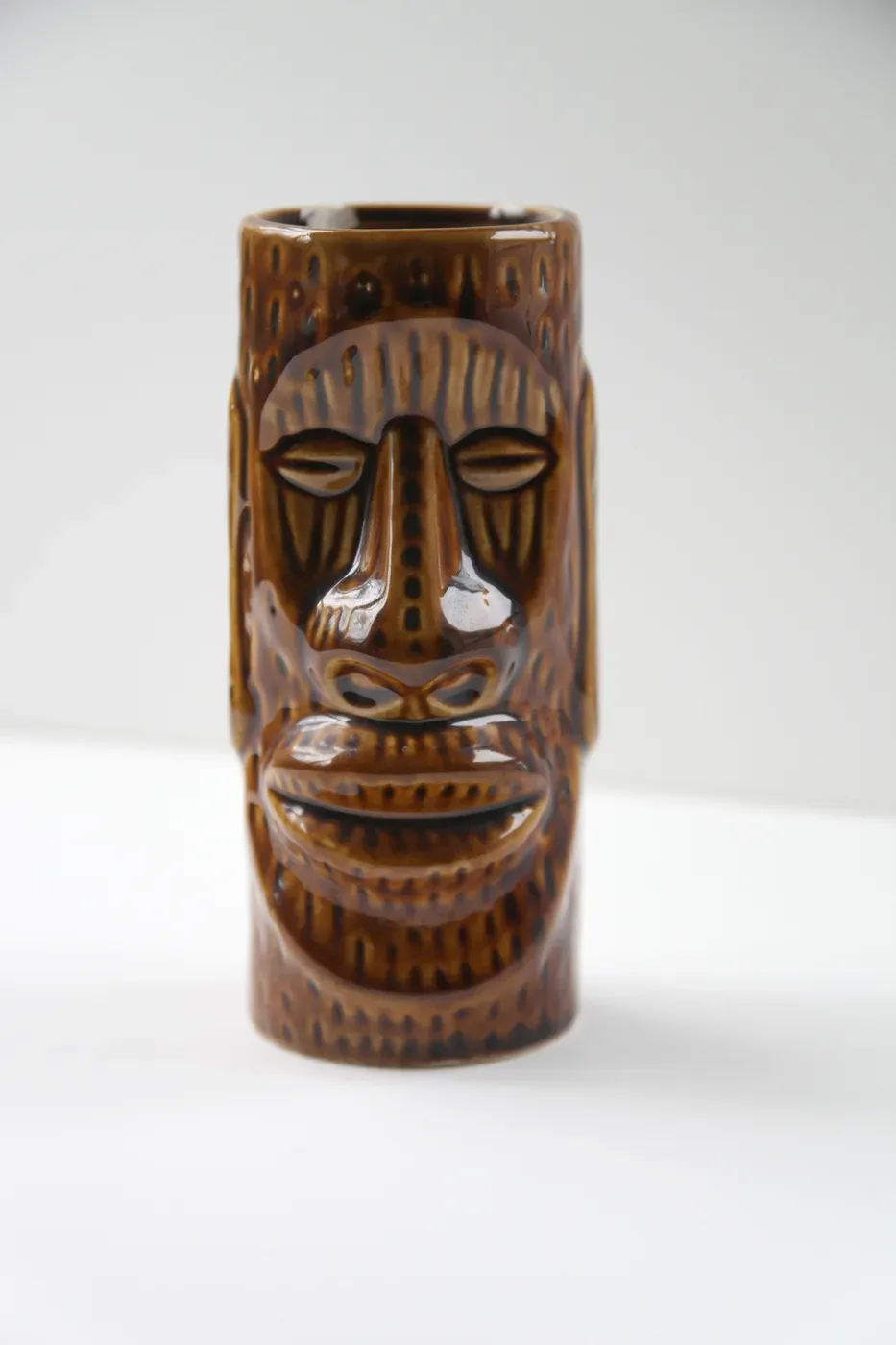
These vessels developed into a distinctive form of barware, often featuring sculptural designs and associations with specific establishments.
Vintage examples can be historically interesting because they document restaurant branding, design preferences, and popular imagery from their period.
Modern mugs also provide an artistic outlet for contemporary ceramicists and designers.
But there's an important distinction between collecting vintage Americana and assuming that every carved or stylized figure represents an authentic Pacific Island tradition.
Many historic tiki objects were products of the American entertainment industry, not traditional cultural artifacts.
Understanding that difference makes collecting more informed and meaningful.
Exotica: The soundtrack of tropical escapism
Tiki's atmosphere extended into music.
During the mid-twentieth century, exotica emerged as a popular style of lounge and orchestral music that evoked imagined faraway environments.
Artists such as Les Baxter and Martin Denny became strongly associated with this sound.
The music used inventive arrangements and unusual sonic textures to create a feeling of mystery, relaxation, and distant travel.
Like the visual culture of tiki, exotica was largely an American interpretation of imagined tropical environments rather than a faithful representation of traditional Pacific music.
That's part of its history, and a distinction worth understanding.
For someone interested in tiki today, exploring the records of this era is one more way to understand the world that midcentury bars and restaurants were trying to create.
Is Tiki Culture the Same as Polynesian Culture?
No.
And understanding that distinction is essential to understanding tiki accurately.
American tiki is a commercial entertainment and design tradition developed primarily in the United States.
Polynesian cultures are living cultures with their own languages, histories, religious traditions, communities, and artistic practices.
They aren't interchangeable.
The American tiki movement borrowed and reinterpreted imagery associated with different Pacific societies, frequently combining elements that had distinct cultural meanings.
What does the word tiki mean?
The word tiki and related figures have meanings within particular Polynesian cultures that predate American cocktail bars.
Those meanings cannot be reduced to one universal definition.
For example, Auckland Museum explains that Māori hei tiki are important taonga, or treasures, often made of pounamu and worn around the neck.
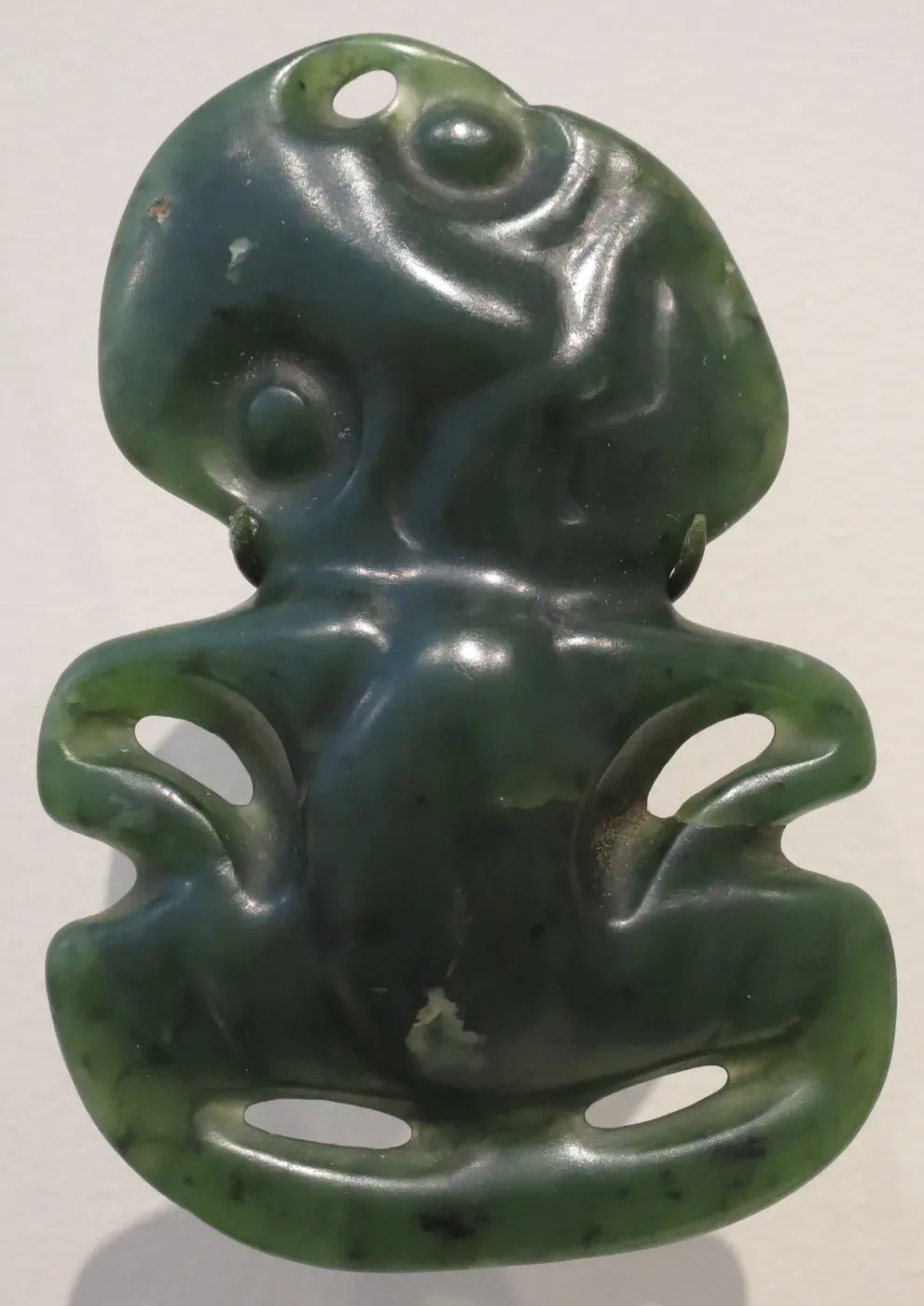
While scholars have debated aspects of their symbolism, the museum emphasizes the personal and ancestral importance these objects can hold, particularly when passed down through generations.
That significance is very different from the role of a novelty cocktail mug.
Source: Auckland Museum, Hey, Hei Tiki
The complicated legacy of Polynesian Pop
Historic American tiki frequently blended decorative motifs and imagined representations of Pacific Islanders in ways that reflected the attitudes of its era.
Some designs relied on stereotypes, while other uses of cultural imagery disconnected objects and symbols from their original meanings.
This history has prompted serious criticism, particularly from Native Hawaiian and other Pacific Islander voices.
A 2019 Los Angeles Times investigation by John Birdsall examined these issues through conversations with cultural scholars, Pacific Islander community members, bartenders, and tiki enthusiasts.
The perspectives weren't identical, but the reporting clearly established that the cultural implications extend beyond questions of decorating taste.
Source: Los Angeles Times, Tiki Bars and Cultural Appropriation
That doesn't mean the history of tiki cocktails, hospitality, or design cannot be appreciated.
It means those elements should be understood in their full context.
We can admire the craftsmanship behind a classic Mai Tai without pretending American Polynesian Pop accurately represents Hawaiian, Māori, Samoan, or other Pacific Island cultures.
We can collect historic objects while recognizing when their imagery reflects stereotypes.
And we can enjoy tropical environments while learning about the real places and people whose cultures contributed to the imagery.
For Tiki Tim Adventures, that distinction matters.
The goal is to explore the history and enjoyment of tropical escapism while respecting the living cultures that are too often flattened into a single fantasy.
The Decline and Revival of Tiki Culture
No cultural phenomenon stays fashionable forever.
By the late 1960s and into subsequent decades, the original tiki craze was losing much of its mainstream appeal.
Design tastes changed. Popular drinking habits evolved. And some of the romanticized imagery that had once been widely accepted came to be viewed critically by a more culturally aware generation.
Many establishments eventually closed or changed direction.
But the tradition never disappeared completely.
Historic destinations, surviving collections, dedicated bartenders, and enthusiasts kept parts of the culture alive.
Later, collectors and researchers began documenting vintage tiki objects, restaurant histories, and forgotten cocktails.
One influential figure in this revival was cocktail historian Jeff "Beachbum" Berry, whose research helped recover and explain recipes from the earlier tropical-drink era.
Historian and author Sven Kirsten also played an important role in documenting midcentury Polynesian Pop, particularly through his 2000 publication The Book of Tiki.
Source: Smithsonian Magazine, Tiki's Revival
As tiki reemerged, its audience increasingly included cocktail enthusiasts, collectors, midcentury design fans, musicians, artists, and people interested in immersive hospitality.
The movement had developed a second life.
Rather than simply recreating the past, contemporary tiki offers opportunities to preserve its creative accomplishments, reconsider its assumptions, and develop new interpretations.
The Books That Helped Preserve Tiki History
By the time tiki culture began experiencing its modern revival, much of its original world had disappeared.
Famous restaurants had closed. Elaborate interiors were demolished or remodeled. Vintage mugs, menus, matchbooks, photographs, and other memorabilia were scattered among collectors, thrift stores, and estate sales.
Fortunately, dedicated historians and collectors recognized that these objects represented something worth preserving.
Their research helped transform tiki from a largely forgotten midcentury fad into a documented chapter of American popular culture.
Sven Kirsten and The Book of Tiki
One of the most influential figures in documenting Polynesian Pop is Sven A. Kirsten, a cinematographer, collector, and self-described urban archaeologist.
His landmark book, The Book of Tiki: The Cult of Polynesian Pop in Fifties America, was published by TASCHEN in 2000.
Rather than focusing primarily on cocktail recipes, Kirsten examined the visual world of American tiki: restaurants, architecture, advertising, ceramics, carvings, menus, and the extraordinary environments created during the movement's midcentury heyday.
His work brought together photographs and examples of material culture that demonstrated how extensively Polynesian Pop had influenced American leisure and design.
Just as importantly, Kirsten approached the subject as a cultural phenomenon worthy of historical documentation.
At a time when many of these objects were dismissed as kitsch, The Book of Tiki helped establish a visual record of a disappearing era.
Reference: The Book of Tiki, Sven A. Kirsten, TASCHEN, 2000
Beyond The Book of Tiki
Kirsten continued exploring the movement through additional publications.
Tiki Modern: ... and the Wild World of Witco, published by TASCHEN in 2007, examined the relationship between Polynesian Pop and midcentury modern design, including the distinctive carved furnishings and decorative objects produced by Witco.
His 2014 book, Tiki Pop: America Imagines Its Own Polynesian Paradise, broadened the historical perspective, examining how Western romanticism, popular entertainment, design, and cultural appropriation contributed to the American tiki phenomenon.
Together, these works provide a valuable visual and historical foundation for anyone interested in understanding tiki beyond the cocktail glass.
Jeff “Beachbum” Berry and the Lost Cocktail Recipes
While Kirsten helped document tiki's visual history, Jeff “Beachbum” Berry pursued another disappearing part of the culture: its original cocktails.
Many historic tiki bartenders kept their recipes secret, sometimes recording ingredients in coded form. As establishments closed and experienced bartenders retired or died, important pieces of cocktail history became increasingly difficult to recover.
Berry researched vintage recipes, interviewed people connected to historic tiki establishments, and worked to reconstruct drinks that had nearly disappeared.
His early book Grog Log, published in 1998, helped bring forgotten tropical cocktails back into circulation.
Beachbum Berry's Sippin' Safari, published in 2007, combined recovered recipes with stories about the people who created and served them.
The book drew on extensive interviews with participants in the original midcentury tiki scene, preserving firsthand accounts alongside cocktail history.
Reference: Beachbum Berry's Sippin' Safari
Why These Books Still Matter
Without the work of researchers, collectors, and historians such as Kirsten and Berry, much of tiki's history would be considerably harder to reconstruct.
Their books document different but complementary aspects of the same cultural phenomenon.
Kirsten preserved and interpreted the visual world of Polynesian Pop.
Berry recovered cocktail techniques, recipes, and stories that might otherwise have been lost.
Both helped new generations appreciate the creativity behind the original movement.
They also provide an opportunity to examine tiki with greater historical perspective, recognizing both the ingenuity of American designers and bartenders and the cultural complexities of the imagery they employed.
For anyone beginning to explore tiki culture, these books offer an excellent next step.
Because the deeper you venture into tiki history, the more you discover that there's always another story behind the mug.
What Does Tiki Culture Look Like Today?
Modern tiki is not one single experience.
Some destinations preserve the look and atmosphere of the original midcentury movement.
Others emphasize cocktail technique, historical research, original artwork, or theatrical storytelling.
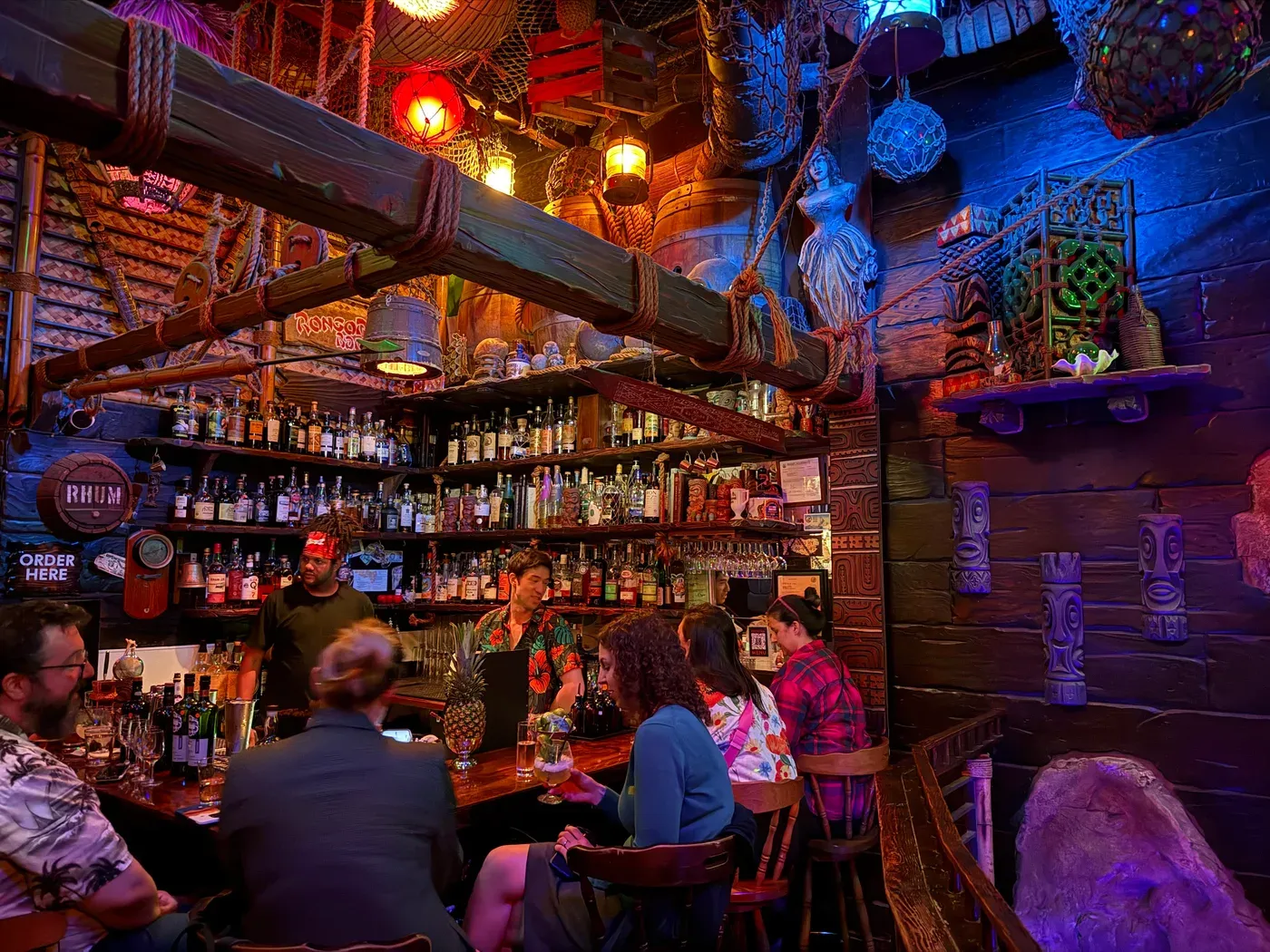
Beyond the bars themselves, there's an entire community of collectors, musicians, artists, event organizers, and enthusiasts.
People collect ceramic mugs, restore vintage furnishings, design home tiki bars, research historic restaurants, and explore tropical music.
The Florida tiki scene is an especially interesting place to encounter different approaches.
Historic establishments and newer cocktail destinations provide opportunities to experience how the tradition has evolved.
But one distinction is worth remembering.
Not every beach bar is a tiki bar.
A waterfront establishment serving frozen drinks may be a wonderful place to spend the afternoon without following the historic traditions of tiki design or cocktail preparation.
Likewise, a genuine tiki experience doesn't require ocean views.
It can exist in a hidden lounge, a carefully designed restaurant, or even a thoughtfully arranged home bar.
The difference lies in the experience the place creates.
For an introduction to destinations around the Sunshine State, explore Florida's Real Tiki Bars: Where to Find Authentic Tiki Culture.
Tiki Culture and Disney's Enchanted Tiki Room
Living near Walt Disney World, it's impossible for me to explore tiki culture without thinking about one of Disney's most distinctive attractions.
Walt Disney's Enchanted Tiki Room represents an important intersection of midcentury tropical escapism and themed entertainment.
The original attraction opened at Disneyland on June 23, 1963.
According to Disney's D23 historical archive, it was originally conceived as a restaurant before being developed into a theatrical attraction.
It became a landmark in the development of sophisticated Audio-Animatronics figures, using mechanical performers, music, lighting, and staging to create an immersive show.
Source: Disney D23, Enchanted Tiki Room
The attraction shares important characteristics with the wider tiki movement: stylized tropical surroundings, theatrical effects, music, storytelling, and the creation of an imagined destination.
It also demonstrates Disney's particular talent for making an entire environment part of the entertainment.
The version at Magic Kingdom continues to introduce visitors to Disney's interpretation of tropical-themed entertainment.
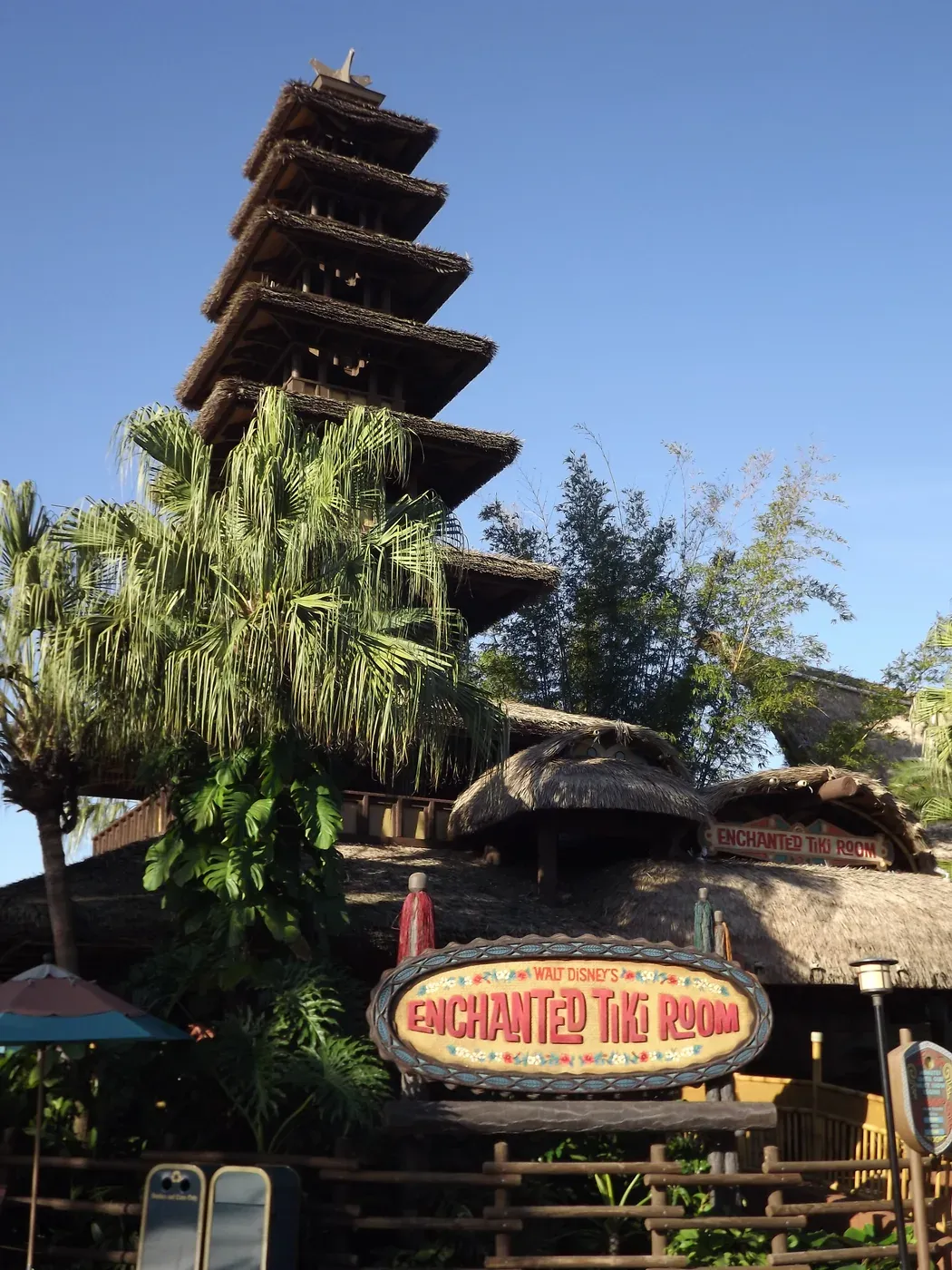
Explore Walt Disney's Enchanted Tiki Room at Magic Kingdom.
For those of us who enjoy both Disney Imagineering and traditional tiki design, the connection is a fascinating one.
Both invite you to cross an ordinary threshold and enter a carefully constructed world.
How to Start Exploring Tiki Culture
You don't need an enormous mug collection or a fully furnished backyard bar to appreciate tiki.
Start with curiosity.
Visit an establishment with a connection to classic tiki traditions. Pay attention to how the atmosphere, music, lighting, and cocktails work together.
Try a carefully prepared classic tropical drink and learn a little about its history. Nonalcoholic tropical cocktails can provide plenty of flavor and craftsmanship, too.
Explore the records of the exotica era.
Look at vintage barware as pieces of design history.
Learn about the people who developed the original cocktails and the modern enthusiasts working to preserve their recipes.
And when exploring imagery or traditions inspired by the Pacific, take the opportunity to learn about the actual cultures behind them.
Here in Florida, there are opportunities to experience both historic institutions and contemporary interpretations.
That's why we're building the Florida Tiki Trail, exploring the places, stories, and people behind the Sunshine State's tropical destinations.
Frequently Asked Questions About Tiki Culture
Is tiki culture Hawaiian?
Not exactly. American tiki borrowed some imagery associated with Hawaii, but it developed primarily as a U.S. entertainment, dining, and cocktail tradition. Native Hawaiian culture is distinct from American Polynesian Pop.
Who invented tiki culture?
There is no single inventor of every aspect of tiki culture. Donn Beach was a foundational pioneer of the modern American tropical cocktail bar, while Victor Bergeron helped develop and popularize the movement through Trader Vic's.
When was tiki most popular?
Tiki became especially prominent in the United States during the post-World War II decades, particularly the 1950s and 1960s.
Are all tiki drinks made with rum?
No. Rum is historically central to many of the best-known tiki cocktails, but tropical cocktail traditions include drinks made with other spirits and alcohol-free ingredients.
What is the difference between tiki and Polynesian Pop?
The terms often overlap when referring to American midcentury tropical-themed design and entertainment. Polynesian Pop can be particularly useful when describing the broader architecture, artwork, décor, fashion, and consumer culture beyond cocktails and bars.
Is tiki culture still popular?
Yes. Tiki continues through historic venues, contemporary cocktail bars, collecting communities, home-bar enthusiasts, festivals, and interest in midcentury design.
Is Disney's Enchanted Tiki Room part of tiki culture?
It is part of the broader history of American tropical-themed entertainment and shares aesthetic and theatrical features with midcentury tiki. It is not a cocktail bar, but it belongs in the discussion of how tropical escapism influenced popular entertainment.
Why Tiki Still Matters
Nearly a century after modern American tiki bars began appearing, the appeal remains surprisingly easy to understand.
We all need an escape occasionally.
Sometimes that means boarding a plane, stepping onto a cruise ship, or planning an elaborate vacation.
But sometimes it can be much simpler.
A beautifully made drink. A favorite record. A warmly lit corner of the patio. Or an evening inside a place designed to make the ordinary world feel very far away.
Tiki's history is more complicated than its tropical fantasy might suggest. Understanding that history makes the experience richer, not less enjoyable.
The cocktails represent genuine craftsmanship. The bars document an important chapter of American hospitality and design. The art and collectibles tell stories about changing tastes, creativity, and cultural representation.
And the community continues to find new ways to enjoy and reinterpret those traditions.
That's what interests me most about tiki.
Not simply the escape itself, but the creativity, history, people, and stories that make it possible.
Here at Tiki Tim Adventures, we're exploring all of it, from vintage Hawaiiana and exotica music to Florida's remarkable tiki destinations and the people keeping the culture alive.
Come along for the adventure.
After all, adventure looks better in a Hawaiian shirt.
Explore next: Tiki & Hawaiiana | Florida Tiki Trail | Florida's Real Tiki Bars