
Field Notes · November 12, 2026 · Tiki & Hawaiiana
What Is Hawaiiana? A Collector's Introduction
Discover what Hawaiiana means, from vintage aloha shirts and Hawaiian music to travel posters, souvenirs, and tips for starting a collection.
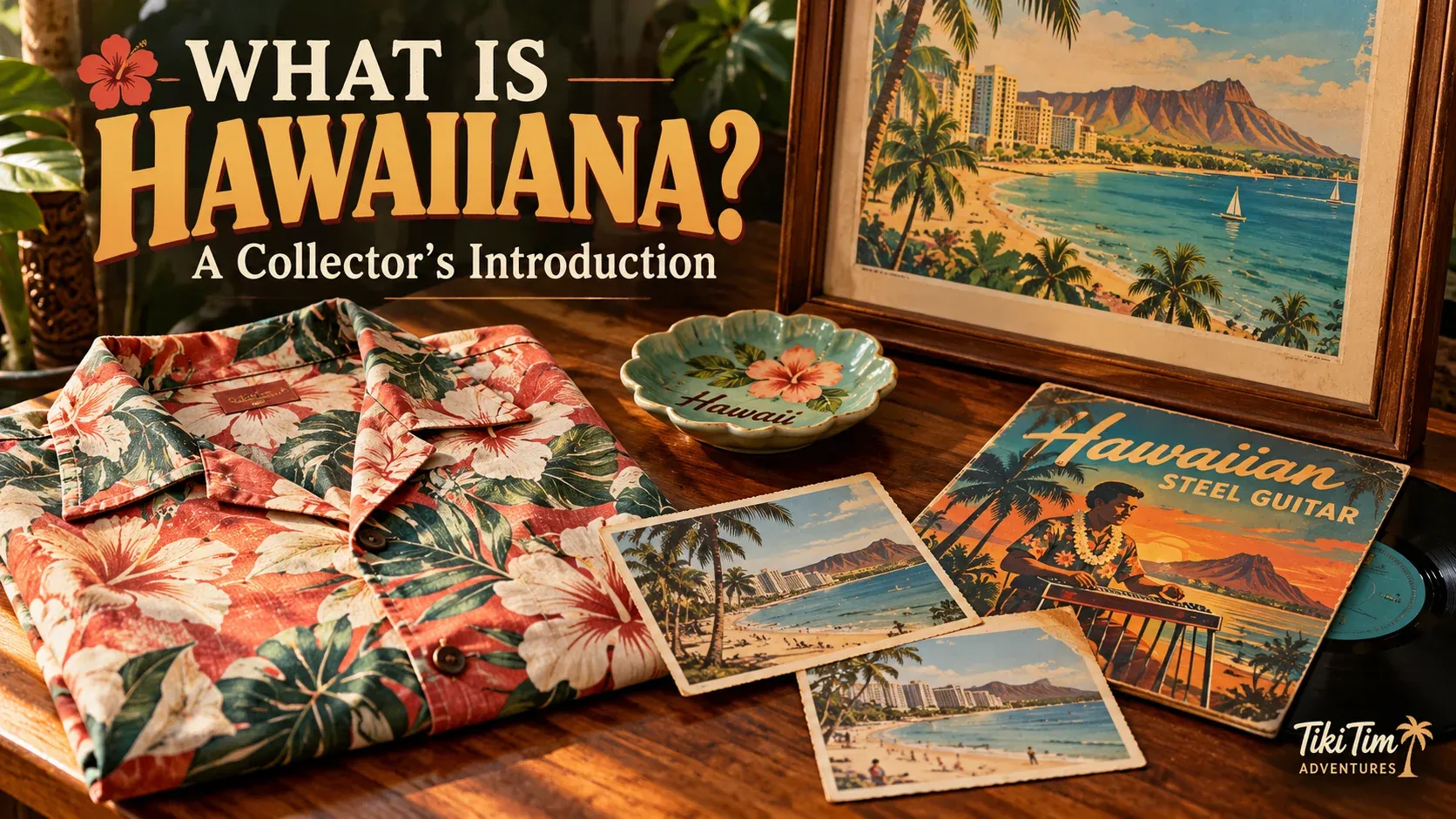
From vintage aloha shirts and colorful travel posters to Hawaiian music, postcards, and forgotten souvenirs, Hawaiiana offers a fascinating way to explore the islands' art, design, and history. Here's how to begin collecting it, and why the stories behind the objects matter.
There is something irresistible about an old Hawaiian travel poster.
Maybe it's the artwork. A brilliant tropical landscape, a steamship on the horizon, or a glamorous vision of Waikīkī from another era.
Maybe it's a vintage aloha shirt with a pattern you can't find in a department store anymore. Or a record sleeve promising the sounds of Hawaiʻi, discovered in the dusty corner of an antique shop.
Whatever catches your eye, there's a good chance you've encountered something collectors call Hawaiiana.
And here's where things get interesting.
Because Hawaiiana isn't simply about finding tropical decorations for your home. Behind those shirts, records, postcards, and souvenirs is a remarkable story involving art, music, immigration, tourism, craftsmanship, marketing, and the changing ways Hawaiʻi has been represented to the world.
Some objects tell us about life in Hawaiʻi. Others tell us what visitors imagined Hawaiʻi to be.
Often, the most fascinating pieces reveal the difference.
Welcome to the world of Hawaiiana collecting.
What Is Hawaiiana?
Hawaiiana is a broad term for objects, artwork, memorabilia, and material culture associated with Hawaiʻi, its history, people, imagery, and popular identity.
In the collecting world, the term commonly describes vintage or historically interesting items such as aloha shirts, travel posters, photographs, postcards, records, ceramics, advertising materials, and souvenirs.
But Hawaiiana has never been one perfectly defined category.
A handmade garment produced in Honolulu, a promotional poster distributed to mainland tourists, and a Hawaiian music recording might all be described as Hawaiiana. Yet they represent different histories, purposes, and relationships to the islands.
That's part of what makes collecting interesting.
You might encounter a 1950s aloha shirt, a postcard showing a long-demolished Waikīkī hotel, a shell-themed souvenir from a tourist shop, or a record featuring a Hawaiian steel guitarist.
Each object opens a different door into the past.
The important thing is learning to recognize which story you're holding.
Hawaiiana, Hawaiian Culture, and Polynesian Pop: What's the Difference?
Before we go any further, we need to make an important distinction.
Hawaiiana, Native Hawaiian culture, and American Polynesian Pop are related subjects, but they're not interchangeable.
Native Hawaiian culture belongs to a living Indigenous people with their own language, genealogy, knowledge systems, artistic practices, and continuing traditions. It is not a historical design category or a collection of tropical motifs.
Hawaiiana is a broad descriptive term that can encompass objects associated with Hawaiʻi, including everyday material culture, commercial products, artistic works, and tourism memorabilia. The meaning depends on the object and its context.
American Polynesian Pop, commonly called tiki culture, is a largely American entertainment and design movement that became particularly popular in the twentieth century. It combined tropical cocktails, theatrical environments, music, and imagery drawn from romanticized ideas of the Pacific.
Those ideas often blurred distinctions among Hawaiian, Polynesian, and other Pacific cultures.
A vintage tiki mug made for an American restaurant tells an interesting story about American popular culture. It does not automatically represent traditional Hawaiian artistry.
Likewise, a travel poster designed to sell vacations in Waikīkī may tell us as much about the tourism industry as it does about Hawaiʻi itself.
Understanding these distinctions doesn't make the objects less fascinating.
It makes their stories richer.
For a closer look at that American entertainment movement, explore our Tiki & Hawaiiana collection.
How Hawaiiana Became Collectible
Collectible Hawaiiana emerged from several overlapping histories rather than one particular moment.
Hawaiʻi had rich artistic, musical, and material traditions long before commercial tourism developed.
During the nineteenth and twentieth centuries, changing political conditions, migration, expanding transportation, and commercial exchange transformed the islands' economy and the objects produced, sold, and circulated there.
In the early twentieth century, Hawaiian music reached audiences far beyond the islands. Touring musicians, sheet music, and recordings introduced mainland listeners to sounds that would influence American popular entertainment.
Meanwhile, steamship travel and eventually commercial aviation helped expand the market for Hawaiian souvenirs.
Hotels, shipping companies, clothing merchants, and other businesses used imagery of the islands to attract travelers.
Flowers, beaches, dancers, palm trees, and dramatic landscapes became recurring elements of commercial design.
By the middle of the twentieth century, visitors could bring home Hawaiian-themed clothing, records, postcards, photographs, and decorative objects that kept the vacation experience alive long after they returned home.
Some of these objects were locally designed and manufactured. Others were made elsewhere for the tourist market.
That distinction matters to collectors.
A souvenir's value as a historical artifact isn't necessarily dependent on whether it was produced in Hawaiʻi. But identifying where it came from, who created it, and who it was intended for can fundamentally change how we understand it.
Today, those once-ordinary objects offer glimpses into the styles, businesses, social attitudes, and travel experiences of earlier generations.
Seven Types of Hawaiiana Worth Exploring
There's no single correct way to collect Hawaiiana. Some people focus on textiles. Others love paper ephemera, records, or ceramics.
These seven categories offer a useful starting point.
1. Vintage Aloha Shirts
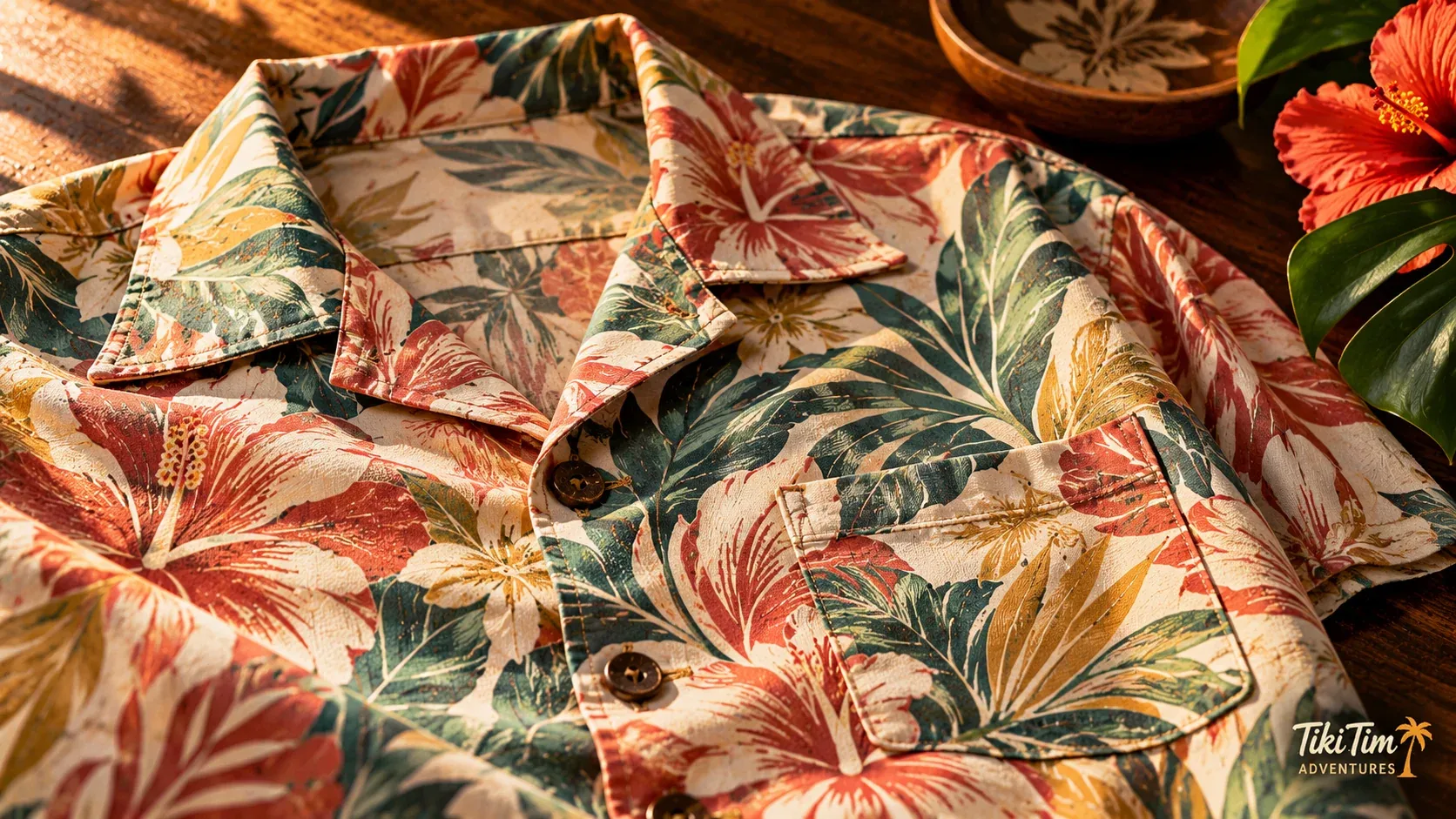
Few objects are more closely associated with Hawaiiana than the aloha shirt.
And there's far more history behind it than a bright floral pattern.
The modern aloha shirt developed in multicultural Hawaiʻi during the early twentieth century, with important contributions from Japanese and Chinese tailors, Filipino garment traditions, imported fabrics, and Western clothing styles.
Its exact origin remains debated, with several makers and businesses associated with its early development.
By the mid-twentieth century, aloha shirts were becoming both an expression of local identity and a popular souvenir for visitors.
For collectors, the details are fascinating.
Look at the fabric, construction, label, print, buttons, and overall condition. Research the manufacturer and compare the garment with documented examples from the same period.
An old-looking shirt isn't necessarily an old shirt. Reproduction designs, vintage-inspired fabrics, and modern labels can make dating a garment surprisingly difficult.
Start by collecting designs you genuinely enjoy, and learn their history as you go.
A shirt doesn't need to be rare to be worth appreciating.
2. Hawaiian Travel Posters and Advertising
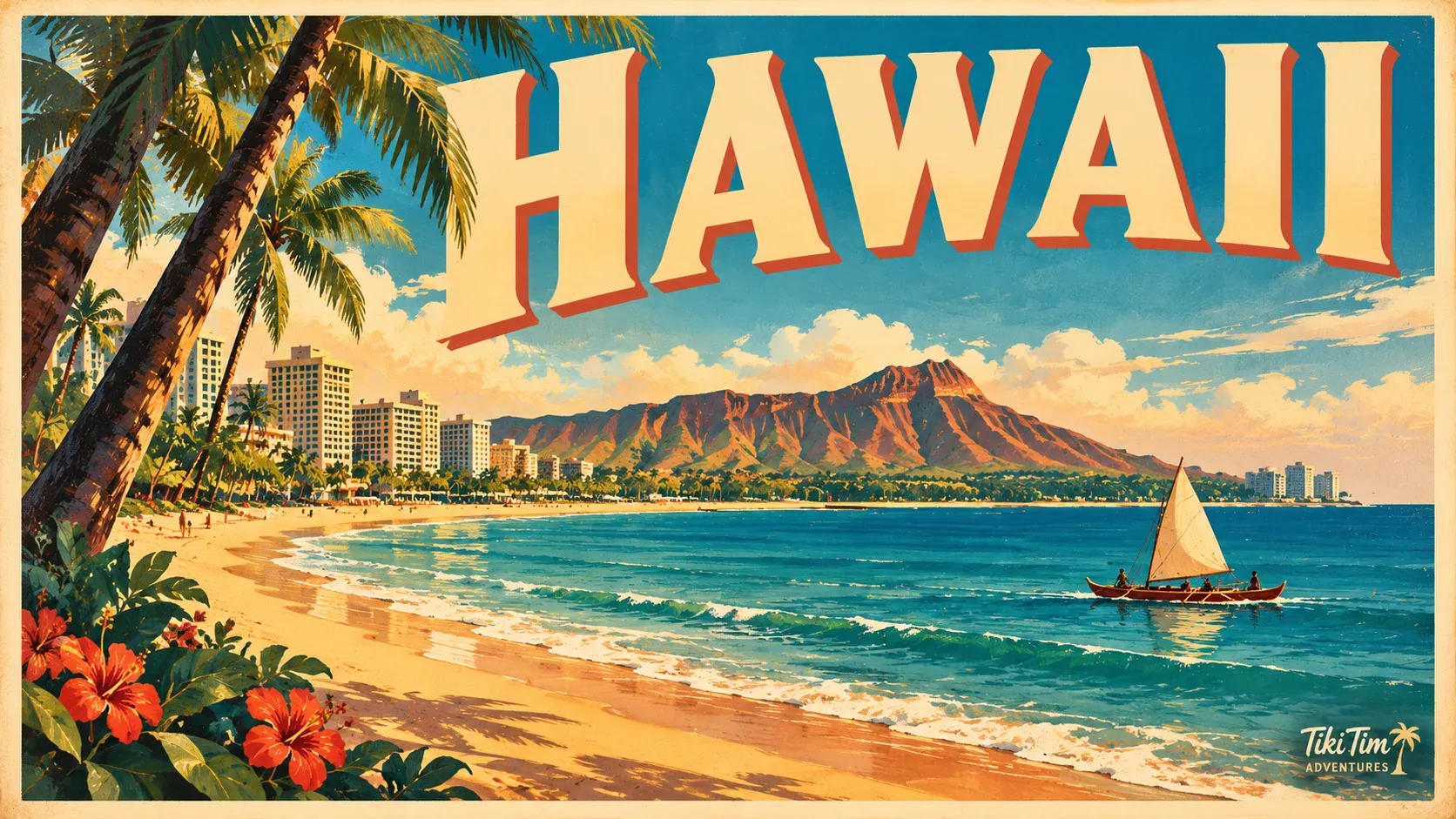
Imagine walking into a travel agency decades ago and seeing an illustrated poster advertising a voyage to Hawaiʻi.
The ocean is impossibly blue. The mountains rise dramatically in the distance. Everything seems to promise a world far removed from everyday life.
That's the appeal of vintage Hawaiian travel advertising.
Shipping companies, airlines, hotels, and tourism businesses helped develop a recognizable visual language for selling Hawaiian vacations.
These designs are interesting not just because they're beautiful, but because they reveal how Hawaiʻi was presented to outsiders.
Collectors should pay attention to the artist, printer, advertiser, production date, and intended use.
And be careful with reproductions.
A modern print made from a vintage design may look wonderful on your wall, but it isn't the same collectible as an original period advertisement.
There is room to enjoy both, as long as you know what you're buying.
3. Vintage Hawaiian Postcards and Photographs
Sometimes the smallest objects contain the biggest stories.
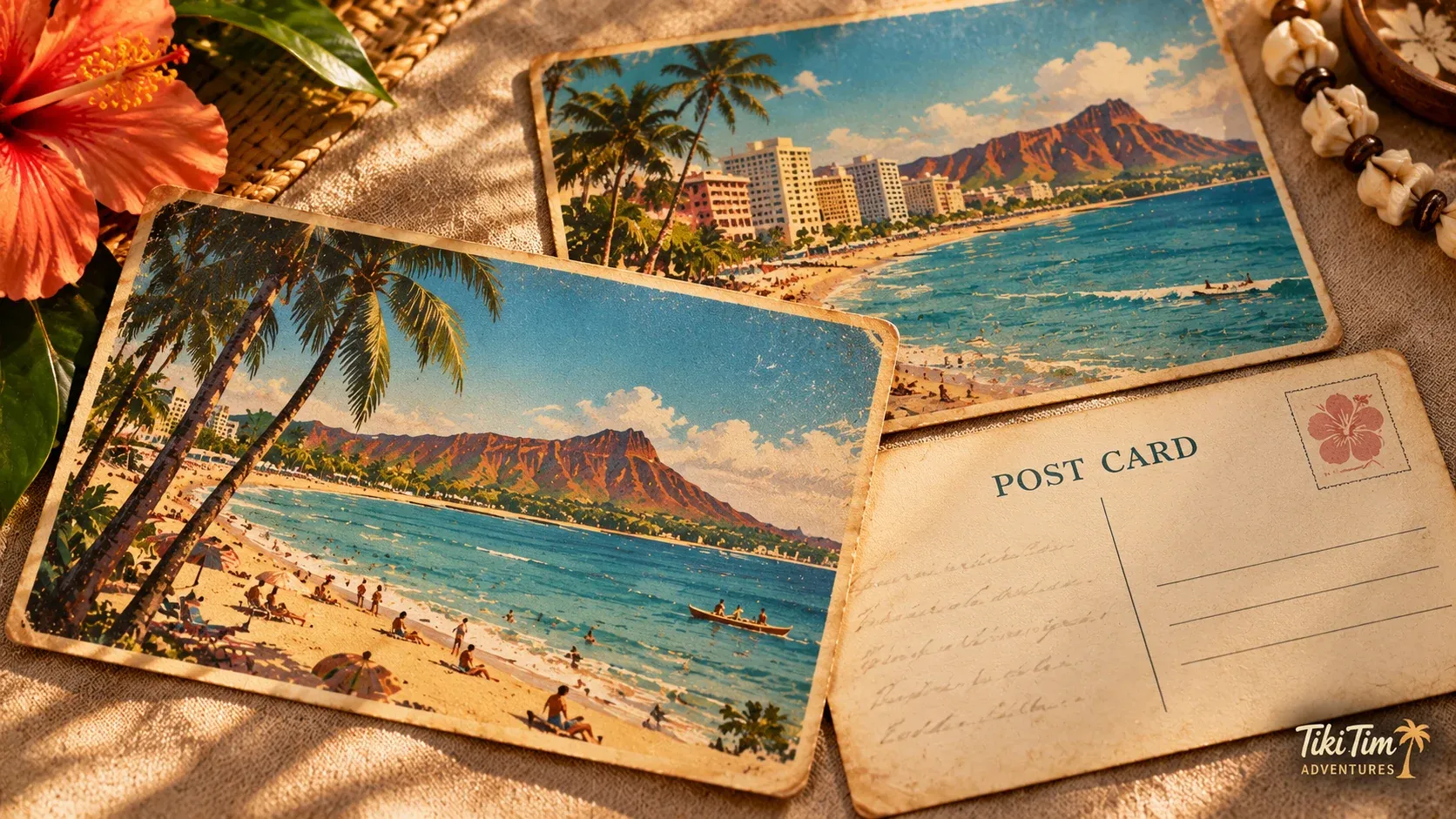
An inexpensive postcard might show a hotel that no longer exists, a neighborhood before extensive development, a changing stretch of coastline, or a visitor attraction that reflects the attitudes of its time.
The back can be just as interesting as the front.
Postmarks, handwritten messages, publishers, and printing details can help place an object in historical context.
A photograph might reveal clothing styles, transportation, buildings, or everyday scenes absent from more polished promotional imagery.
For beginners, postcards are an approachable collecting category.
They're relatively easy to store, often inexpensive compared with large advertising pieces, and provide endless opportunities for research.
Start with one place, era, or subject that interests you. Then see where the history leads.
4. Hawaiian Music and Vintage Records
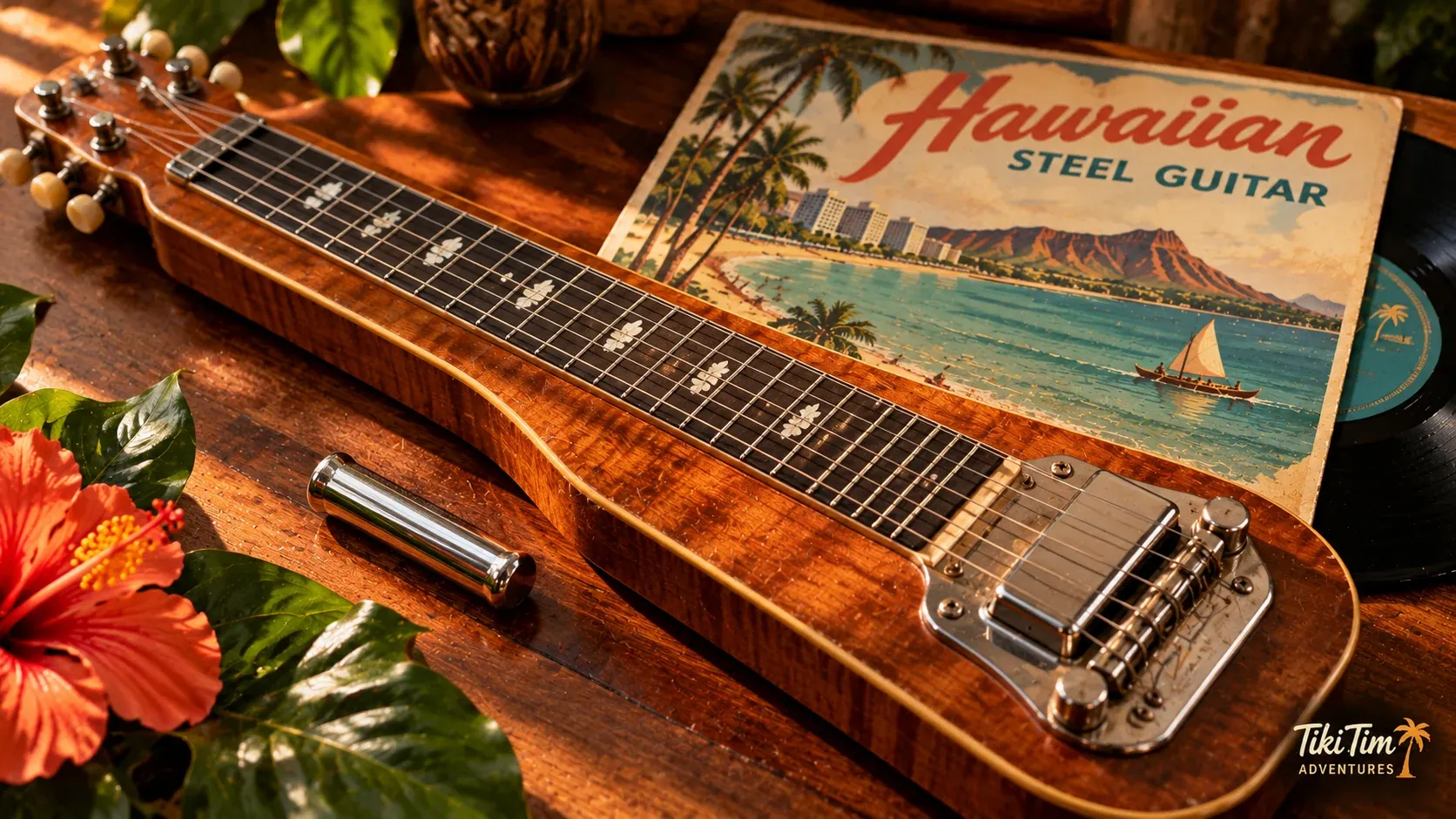
Hawaiiana isn't limited to things you can hang on a wall.
Some of its most interesting history can be heard.
Hawaiian musicians played an important role in the spread of Hawaiian music and the development of popular musical styles beyond the islands.
The steel guitar is a particularly important example. Developed in Hawaiʻi in the late nineteenth century, its distinctive sound later traveled into other musical traditions.
Vintage records, sheet music, album artwork, and music-related advertising can all become part of a Hawaiiana collection.
But collectors should make another important distinction.
Hawaiian music encompasses many musical traditions and innovations. It should not be confused with exotica, the mid-century popular music genre associated with fantasy tropical environments and the American tiki movement.
Both can be historically interesting, but they tell different stories.
Research the performers, songwriters, labels, recordings, and original release dates.
An album cover might be visually spectacular. Understanding the musicians behind it makes the discovery even better.
5. Hawaiian Souvenirs and Decorative Objects
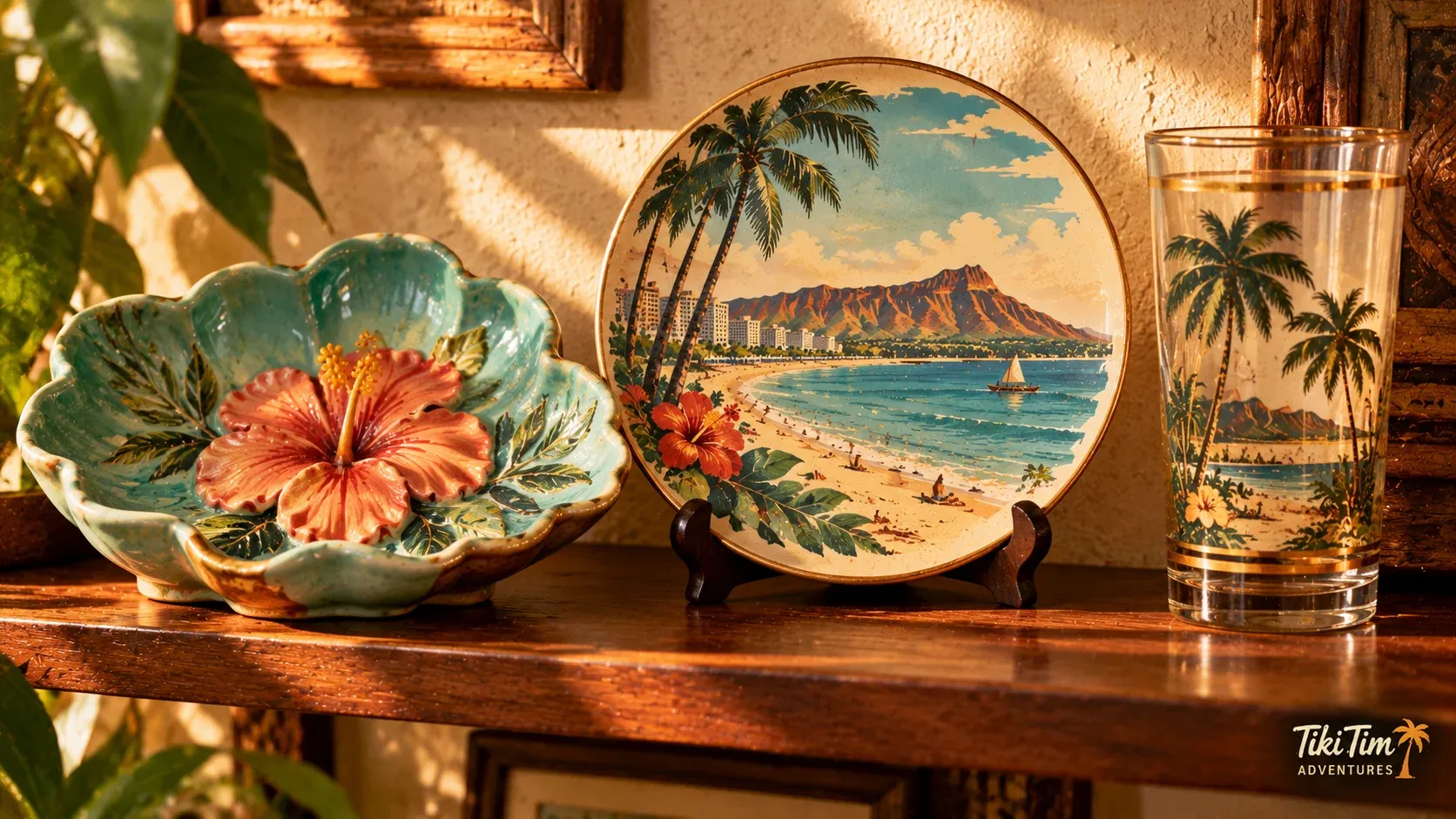
Open an old souvenir cabinet and you might encounter ceramic dishes, small figurines, ashtrays, serving trays, painted glassware, or objects bearing the names of Hawaiian hotels and businesses.
Some are beautifully designed. Others are delightfully kitschy.
Together, they tell a story about what travelers wanted to remember and what merchants believed visitors would buy.
Tourism souvenirs are especially interesting because the line between local craftsmanship and mass-produced merchandise is not always obvious.
An object may have been designed in Hawaiʻi, manufactured overseas, and sold in a Waikīkī gift shop.
That doesn't automatically make it historically uninteresting.
It simply means the object's origin deserves investigation.
Pay attention to manufacturer marks, labels, materials, and any documentation accompanying the piece.
And remember that a decorative commercial souvenir should not be confused with a Native Hawaiian ceremonial or culturally significant object.
6. Vintage Hawaiian Books, Brochures, and Ephemera
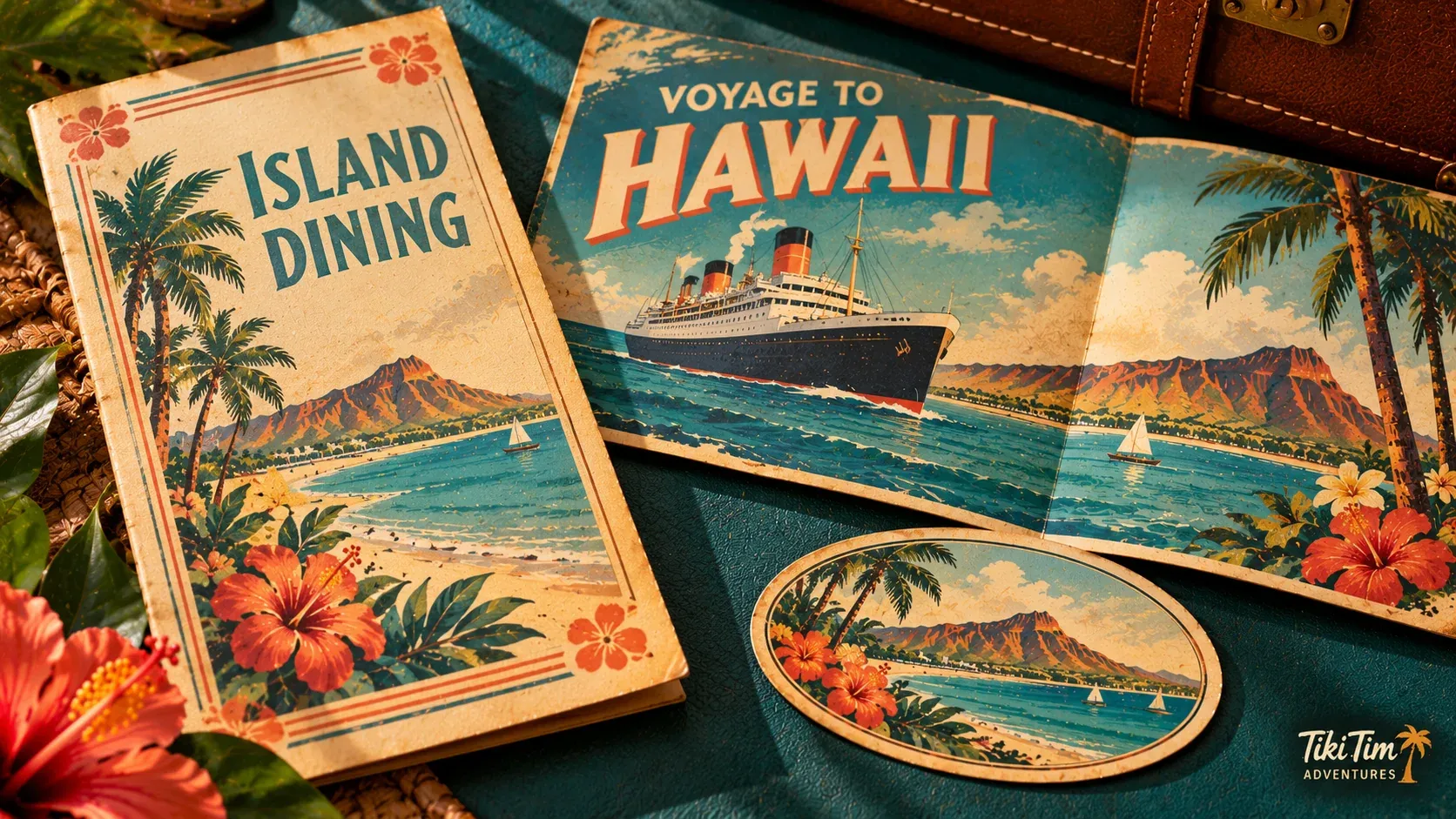
Sometimes history survives in the things nobody expected anyone to keep.
A restaurant menu. An old hotel brochure. A cruise itinerary. A luggage label. A department store advertisement. A concert program.
Collectors call much of this material ephemera, meaning printed or other everyday material originally produced for temporary use.
These objects can be surprisingly revealing.
An old hotel brochure shows not only how a property looked but how it positioned itself to guests.
A restaurant menu can document an establishment's offerings, design aesthetic, and pricing at a particular time.
A travel brochure may preserve advertising language and imagery that now feel very different from contemporary representations of Hawaiʻi.
The most interesting pieces often reward careful reading.
Sometimes the story isn't in the illustration at all.
It's in the fine print.
7. Hawaiian Art and Artist-Designed Objects
This is a category where research, proper attribution, and cultural awareness are especially important.
Artwork associated with Hawaiʻi encompasses many different traditions and artistic communities.
It includes work by Native Hawaiian artists, Hawaiʻi-born and Hawaiʻi-based artists, immigrant artists, visiting artists, and commercial illustrators.
Their work should not be treated as one interchangeable tropical style.
When considering a painting, print, sculpture, or artist-designed object, begin by identifying the maker.
Who created it? When? What materials were used? What was the intended audience? What relationship did the artist have to Hawaiʻi?
Signed and documented works can offer clearer starting points for research, but a signature alone does not establish authenticity.
For culturally significant material, the ethical questions may be just as important as the usual collecting questions.
The goal isn't simply to acquire something that looks Hawaiian.
It's to understand and respect the work and the people behind it.
What Makes Vintage Hawaiiana Valuable?
Here's a question every new collector eventually asks:
Is this thing actually worth anything?
The answer depends on much more than age.
Several factors can influence an object's desirability and potential market value.
Authenticity: Is the object genuinely from the claimed period or manufacturer?
Condition: Has it survived with its original materials, details, and appearance reasonably intact?
Rarity: How frequently do comparable examples appear?
Provenance: Is there reliable documentation of its origin, ownership, or history?
Design and craftsmanship: Is it associated with a notable artist, maker, design, or manufacturing technique?
Collector demand: Are buyers actively interested in this type of object?
Those factors interact in complicated ways.
An uncommon object isn't automatically valuable. A familiar item can still attract substantial interest if its condition or design is exceptional.
And asking prices are not the same as completed sale prices.
Before spending significant money, compare documented examples and actual completed transactions. For high-value pieces, consider consulting a qualified specialist.
Most importantly, don't make investment potential your only reason for collecting.
A collection built around genuine curiosity tends to be more satisfying than one built around the hope that every flea-market find will fund an early retirement.
How to Start Collecting Hawaiiana
You don't need a large budget, a dedicated display room, or a collection of rare artifacts to begin.
You need curiosity and a little patience.
Start With One Category
Choose what already attracts you.
Maybe you love the design of mid-century aloha shirts. Perhaps old Hawaiian records are your thing. Or maybe you're fascinated by the evolution of Waikīkī through vintage postcards.
A narrow focus makes it easier to recognize details and develop expertise.
You can always branch out later.
Research Before You Buy
Learn to identify manufacturers, labels, materials, printing methods, and historical periods.
Museum collections, archives, reliable collecting references, and documented auction records can help you compare examples.
Ask sellers about provenance and look for supporting evidence rather than relying on phrases like "rare vintage" or "museum quality."
The more you study, the easier it becomes to recognize a good story and a questionable listing.
Buy What You Love
This is particularly important when you're getting started.
A modestly priced postcard that captures a place or period you find fascinating can bring more enjoyment than an expensive object purchased simply because somebody called it collectible.
Build a collection with a point of view.
Keep Records
Document each object when you acquire it.
Record the seller, purchase date, price, measurements, condition, markings, and any known provenance.
Photograph important details.
These notes can become valuable later, particularly when researching an item's history or passing the collection to someone else.
Learn From Museums and Archives
Institutions such as Bishop Museum, Honolulu Museum of Art, Hawaiʻi State Archives, and university collections provide valuable opportunities to study documented historical material.
They also demonstrate why careful attribution matters.
An object becomes more meaningful when you can connect it to its maker, community, historical context, or intended use.
How to Preserve a Hawaiiana Collection
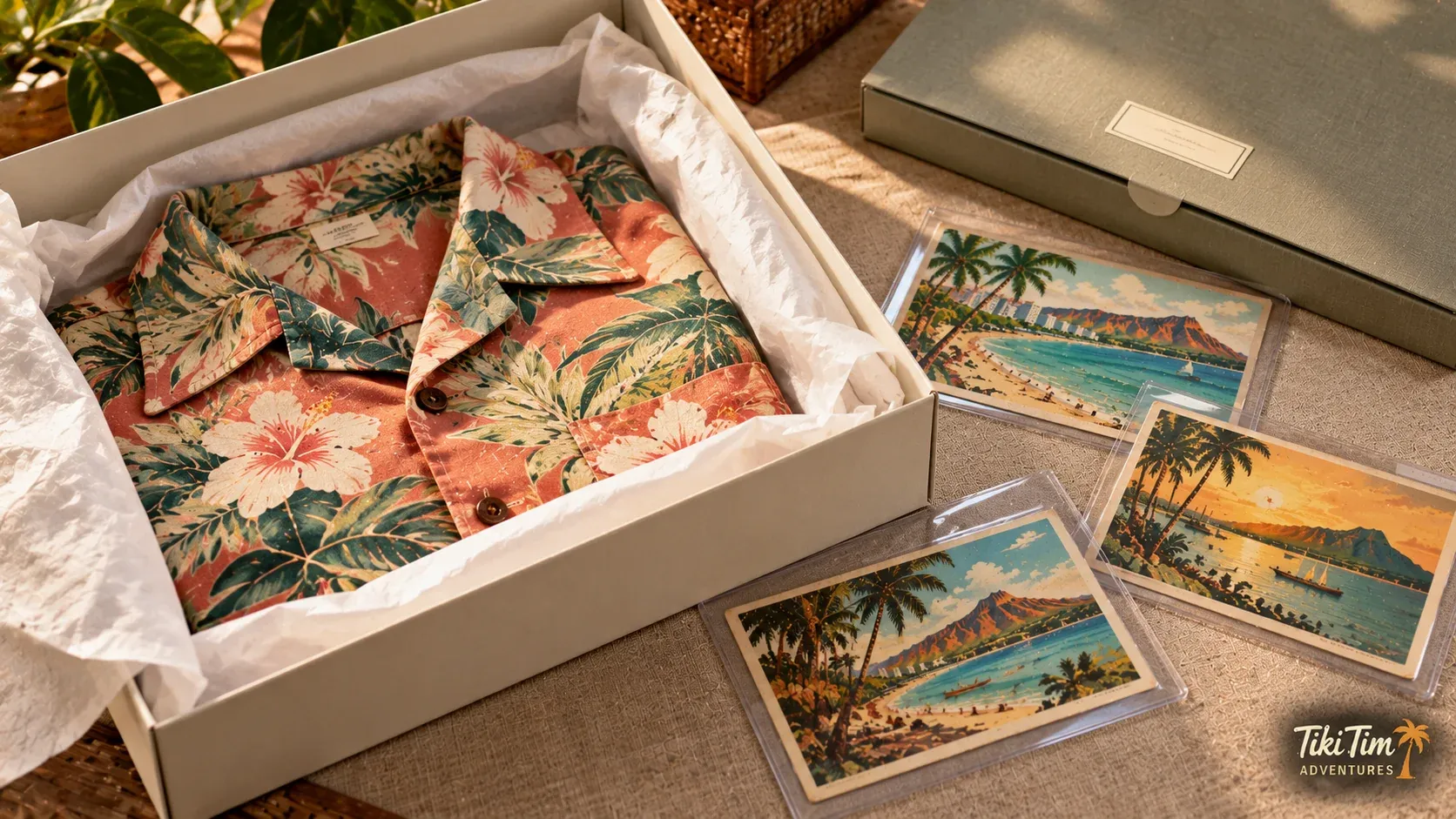
Finding a vintage treasure is exciting.
Damaging it because you displayed it in direct sunlight is considerably less exciting.
Different materials require different preservation approaches, but a few general principles can help.
For vintage textiles, avoid prolonged exposure to direct light. Use appropriate archival storage materials and avoid unnecessary folding, stretching, or handling.
Paper items such as postcards, prints, and brochures generally benefit from protective, archival-quality enclosures and storage away from moisture and excessive light.
Records should be handled carefully, stored appropriately, and kept away from damaging heat.
Ceramics and glassware need stable displays, secure shelving, and protection from accidental impacts.
For fragile, valuable, or unusual materials, consult a qualified conservator rather than experimenting with household cleaning products.
And remember, restoration isn't always the right decision.
An object's original condition, even with signs of age, can be an important part of its history.
Collecting Hawaiiana With Cultural Awareness
There's another responsibility that comes with collecting objects connected to Hawaiʻi.
Not everything associated with Hawaiian history belongs in the commercial collectibles market.
Native Hawaiian cultural items may carry familial, spiritual, communal, or ceremonial significance that cannot be reduced to an antique-store price tag.
The Native American Graves Protection and Repatriation Act establishes processes through which eligible Native Hawaiian organizations and descendants can seek the return of certain cultural items from covered museums and federal agencies.
The existence of a market listing doesn't, by itself, establish that an object's acquisition or sale is appropriate.
If you're uncertain whether something is culturally sensitive, research it before considering a purchase and seek guidance from qualified cultural authorities.
And when studying commercial Hawaiiana, remain aware of the history surrounding its imagery.
Some tourism materials celebrate recognizable Hawaiian places and artistic traditions. Others reflect romanticized or stereotyped portrayals created for outside audiences.
Both can be studied as historical evidence without treating the imagery as an accurate representation of Native Hawaiian life.
Responsible collecting means being willing to ask whose story an object tells, whose story it leaves out, and whether its history has been accurately represented.
It's possible to love old Hawaiian travel art while recognizing the limitations of the world it advertised.
In fact, that curiosity is part of what makes the subject so rewarding.
Your Collection Doesn't Have to Be Expensive to Be Interesting
There is something wonderfully personal about collecting Hawaiiana.
One person might spend years researching vintage clothing labels.
Another might fill a shelf with old Hawaiian records.
Someone else could build an entire collection around postcards depicting the changing Waikīkī shoreline.
And another collector might simply keep a few meaningful objects that remind them of a favorite place, era, or design style.
None of these collections needs to look like a museum exhibition.
What matters is the connection.
The more you learn about the objects, the more interesting they become.
A shirt becomes a story about local design and migration.
A record becomes a story about musicians whose innovations traveled around the world.
A faded postcard becomes a window into a place that has changed.
And that beautifully illustrated travel poster?
Suddenly, it's more than a decoration.
It's an invitation to discover the complicated, colorful, and endlessly fascinating history behind the image.
That's the real appeal of Hawaiiana.
Not simply collecting things from the past, but learning how much of the past those things can reveal.
Continue Exploring The Aloha Archive
Interested in the history, artistry, and collecting culture surrounding Hawaiʻi?
Visit The Aloha Archive for more stories about Hawaiian design, vintage collectibles, aloha wear, music, and the cultural history behind the objects.
And if your interests extend to tropical cocktails, immersive bars, and American Polynesian Pop, explore our Tiki & Hawaiiana collection or begin planning an adventure with our guide to Florida's tiki bars.
Because the best collections, much like the best adventures, usually begin with curiosity.
Adventure looks better in a Hawaiian shirt.